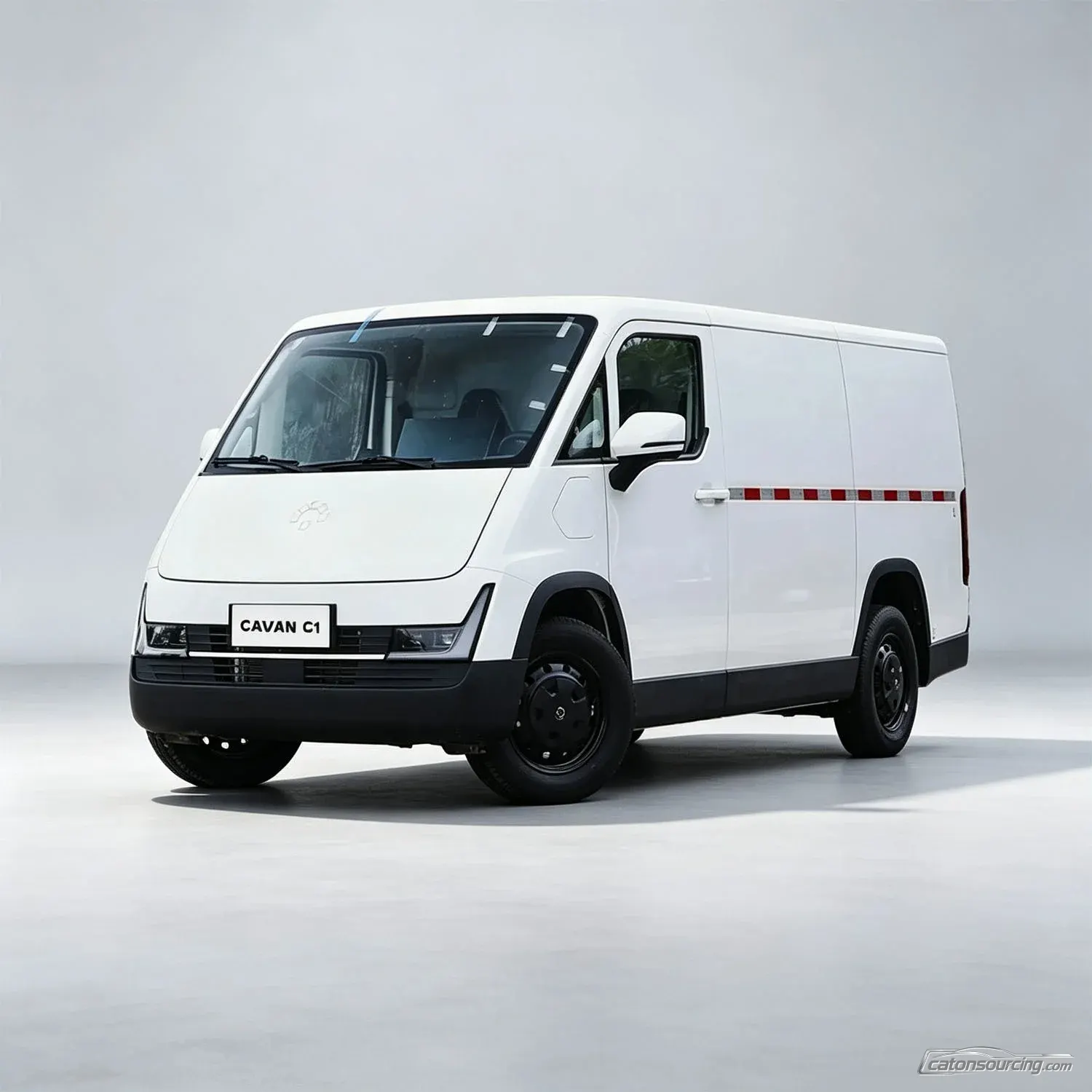
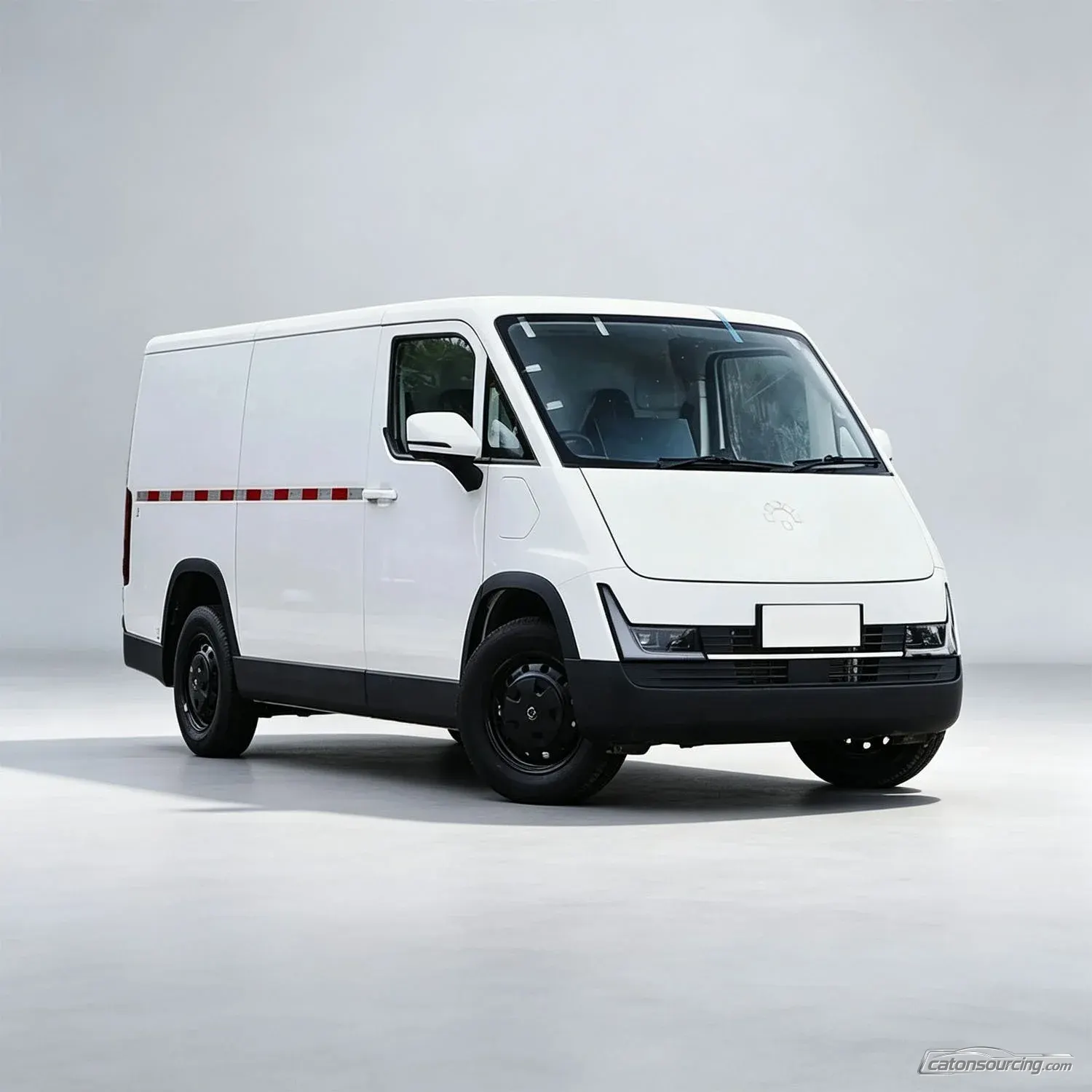
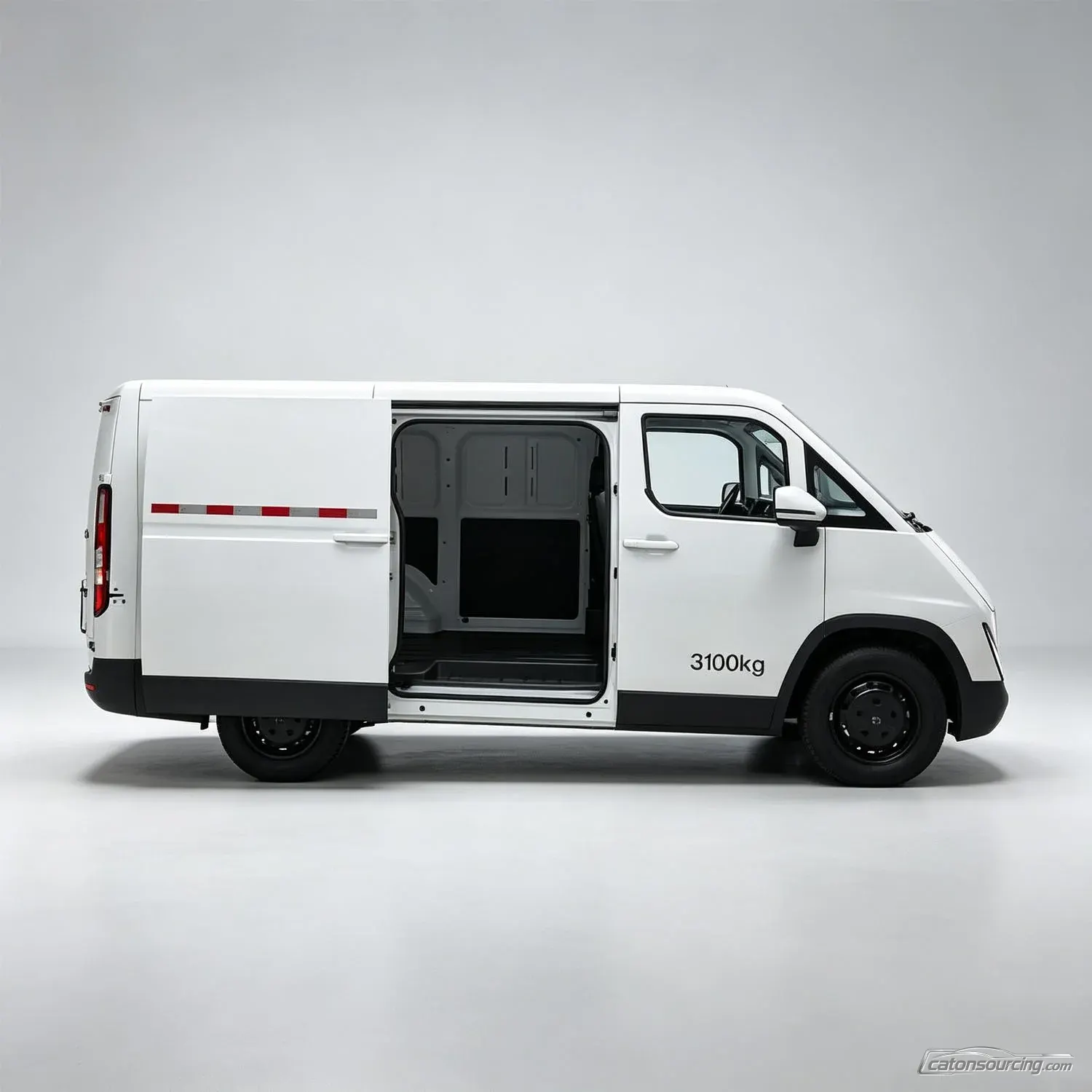
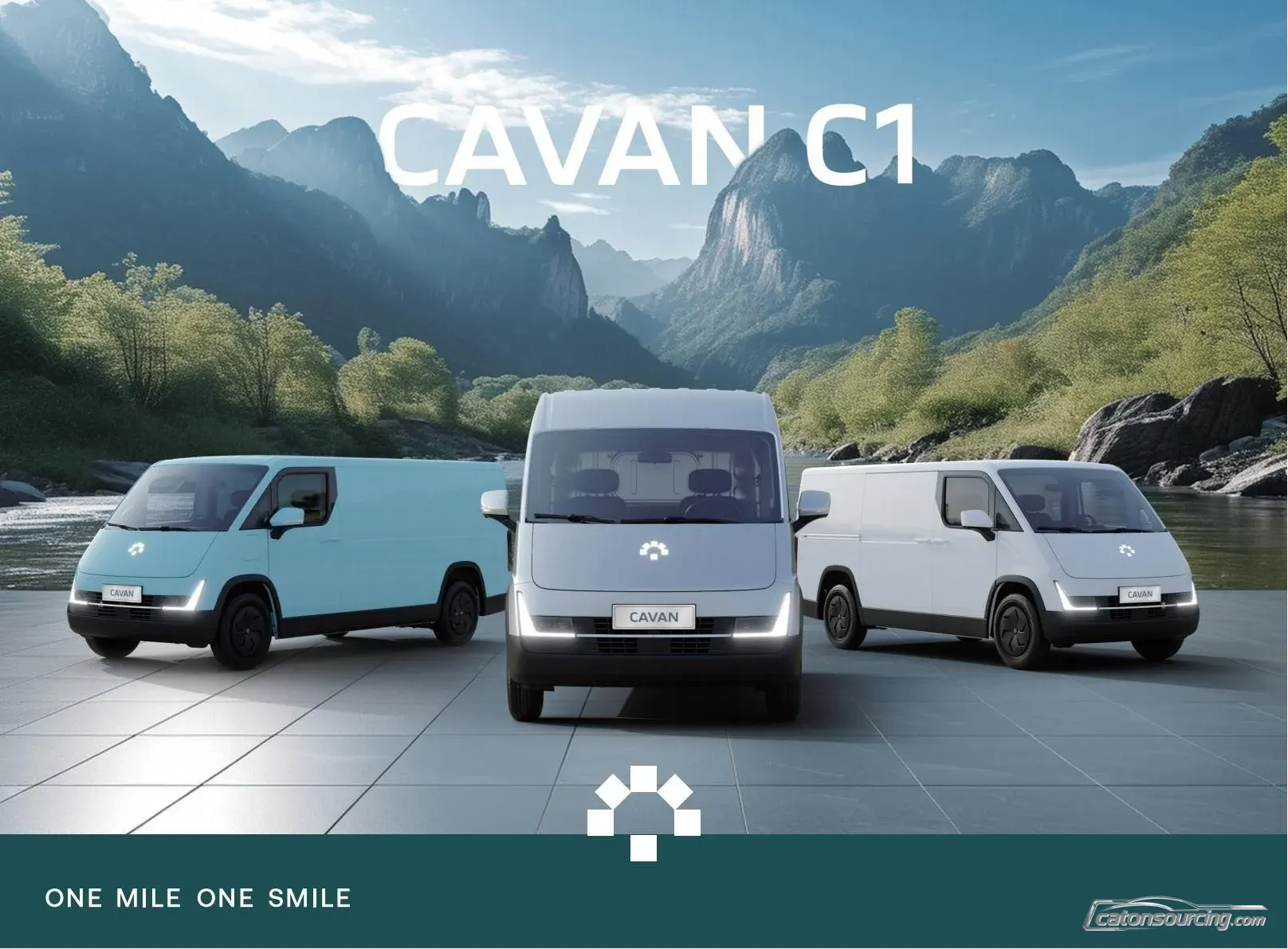
The CAVAN C1 is a battery-electric commercial van developed by Foton, positioned as a zero-emission solution for urban logistics and last-mile delivery. It is built on a dedicated new energy platform rather than being a converted combustion vehicle, which allows for a more efficient packaging of batteries and cargo space.
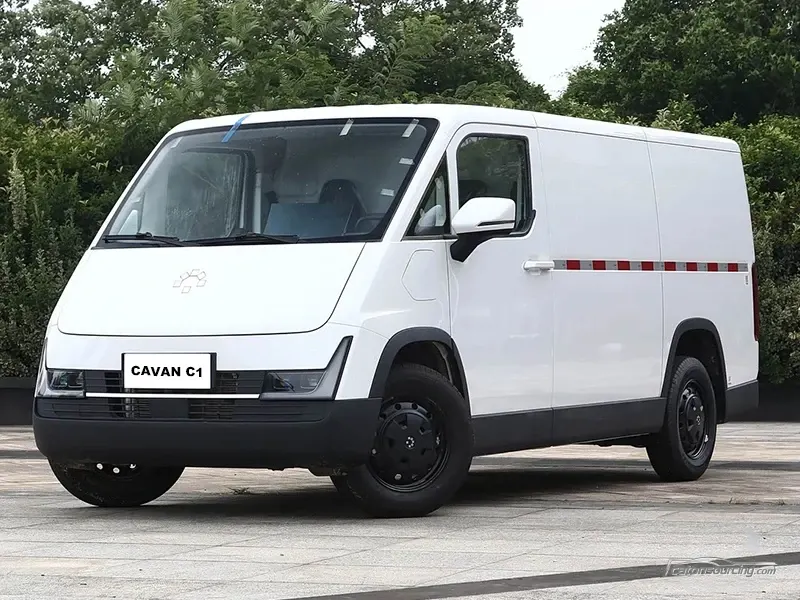
The vehicle is offered in three distinct configurations at launch, differing primarily in wheelbase, roof height, and battery capacity. The entry-level C1 is the most compact, featuring a standard wheelbase and roof. The C1 Plus extends the wheelbase for greater cargo volume, while the C1 Max retains the longer wheelbase but adds a high roof, maximizing load space for bulky items. Across all versions, the C1 prioritizes practicality, offering dual sliding side doors and rear barn doors as standard equipment, a configuration that facilitates easy access for both manual loading and forklift operations in tight urban environments.
Powering the C1 is a single electric motor mounted at the front, driving the front wheels. The motor delivers consistent output across the range, providing sufficient acceleration for city traffic and merging onto faster roads. The driving experience is characterized by a one-pedal feel in its default Eco mode, thanks to strong regenerative braking that recovers energy during deceleration. The suspension setup, with MacPherson struts at the front and leaf springs at the rear, is tuned for load-bearing capability rather than outright comfort, though reviewers note the ride is acceptable for a commercial vehicle, particularly when unladen. The steering is described as neutral, though the turning circle is not particularly tight, a trade-off for the long wheelbase that benefits cargo capacity.
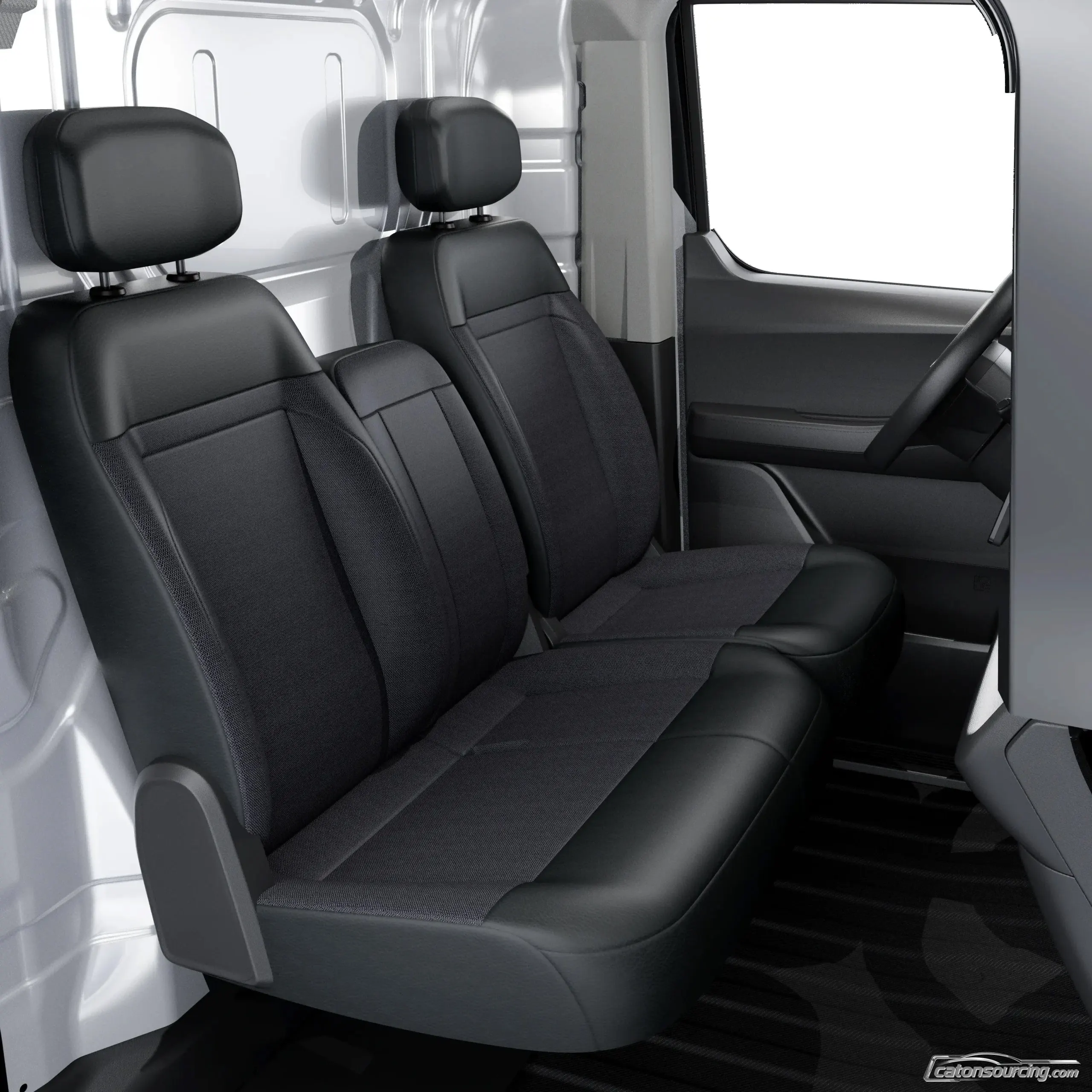
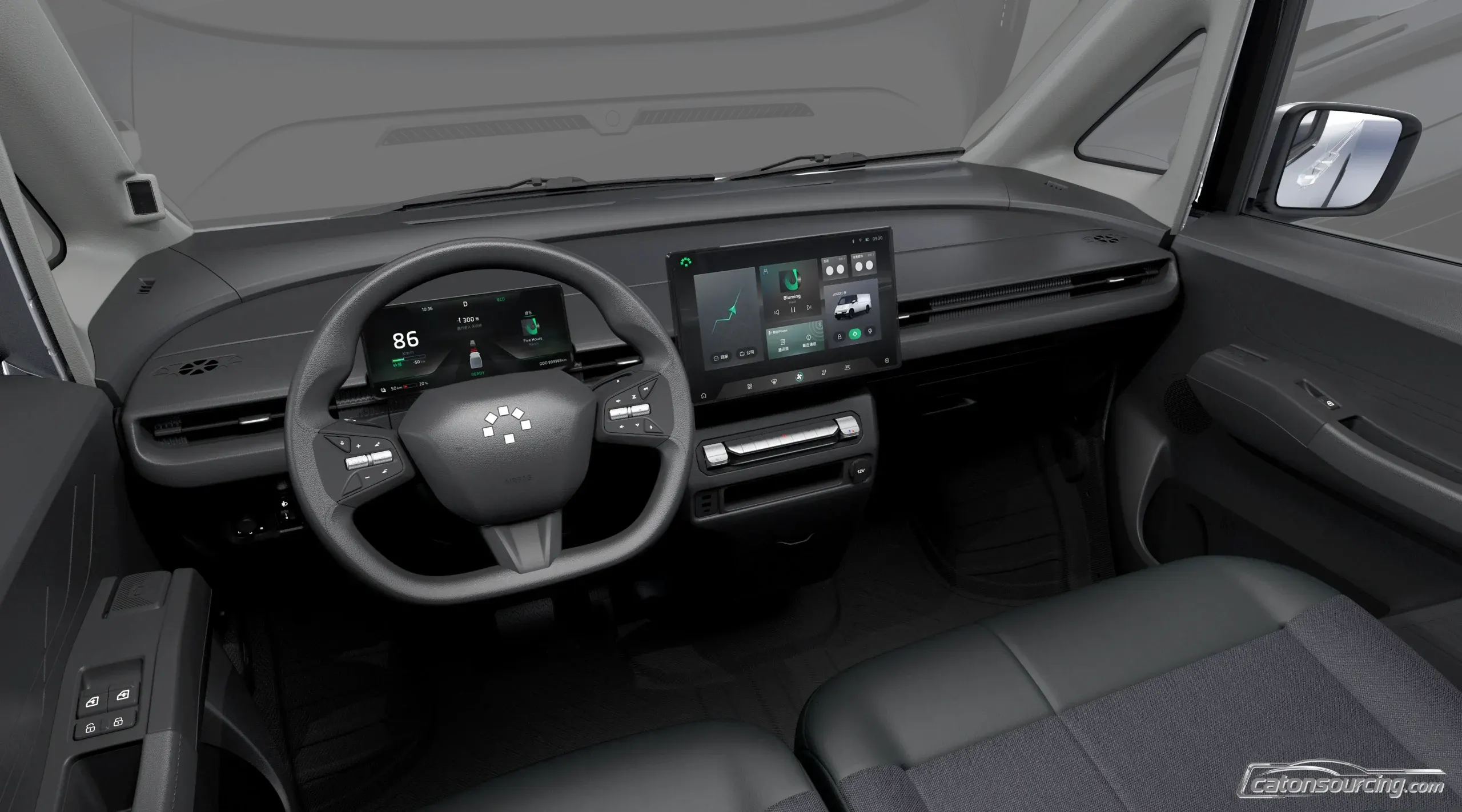
Inside the cabin, the C1 adopts a practical, hard-wearing approach. The dashboard is dominated by a central touchscreen that handles infotainment and vehicle settings, paired with a digital instrument cluster for the driver. A notable feature is the three-seat bench, allowing for a driver and two passengers, which is useful for delivery teams. However, the cabin has drawn criticism for some ergonomic choices. Reviewers have highlighted that the front wheel arch intrudes significantly into the driver's footwell, crowding the brake and throttle pedals. Storage space is limited on the dashboard, though there are large door pockets and underseat storage accessible by flipping up the cushions. The driver's seat is a suspension unit with heating and cooling functions, but some testers found the adjustment range and firmness less than ideal.
In terms of charging and efficiency, the C1 supports DC fast charging via a CCS2 connector. Real-world testing has shown that on a 100 kW charger, the vehicle can accept charge at rates up to approximately 90 kW, tapering off as the battery nears full capacity. Official claims suggest a 20 to 80 percent charge can be achieved in about 18 minutes under optimal conditions, though independent testing has observed longer times depending on the charger and conditions. The C1 also features Vehicle-to-Load capability, with both interior and exterior power outlets, allowing the van to run tools or equipment on a job site, a feature that adds significant utility for tradespeople.
Safety and driver assistance systems are a key part of the C1's offering. The vehicle includes autonomous emergency braking, adaptive cruise control, lane-keep assist, blind-spot monitoring, and rear cross-traffic alert as part of its advanced driver assistance suite. The body structure utilizes a high proportion of high-strength steel, and the van is certified to European Whole Vehicle Type Approval standards, reflecting a focus on meeting international safety and quality benchmarks. However, it should be noted that the C1 is equipped with only two airbags (front occupants), and some reviews have pointed out the absence of side curtain airbags, which is a consideration for fleet buyers prioritizing occupant protection in side-impact scenarios.
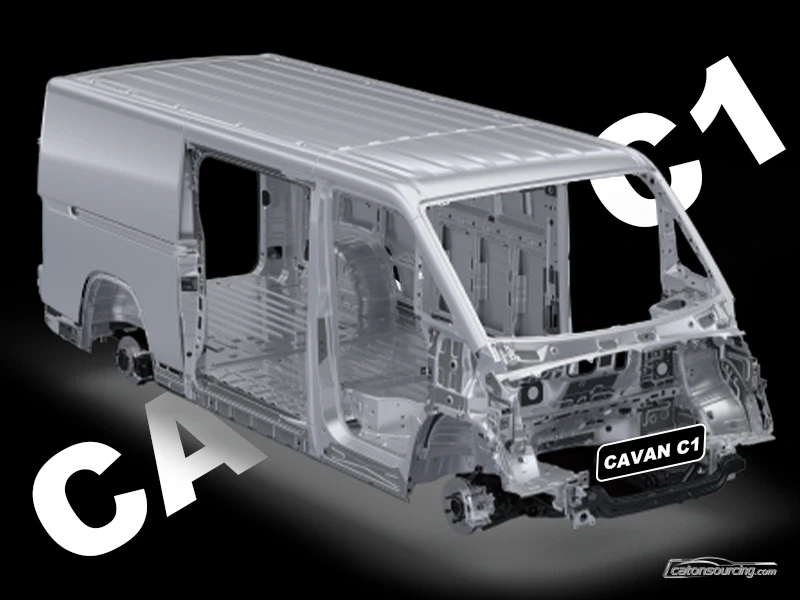
From a cargo perspective, the C1 is designed for efficiency. The load floor is low, and the wide side doors and rear opening are intended to speed up loading and unloading. The cargo bay includes multiple tie-down points mounted low on the walls, and interior lighting. However, some practical shortcomings have been noted: the cargo area walls are only lined halfway up, the checker-plate floor can become slippery when wet, and there is no dedicated mounting point for a spare tire inside the van, with the spare often supplied loose in the cargo bay. Additionally, there is no pass-through hatch in the cargo barrier for carrying longer items that could slide under the front seats. These details suggest the C1 is a capable but cost-conscious tool, where the focus is on the core electric drivetrain and load volume rather than on refined interior finishes or every possible convenience feature.
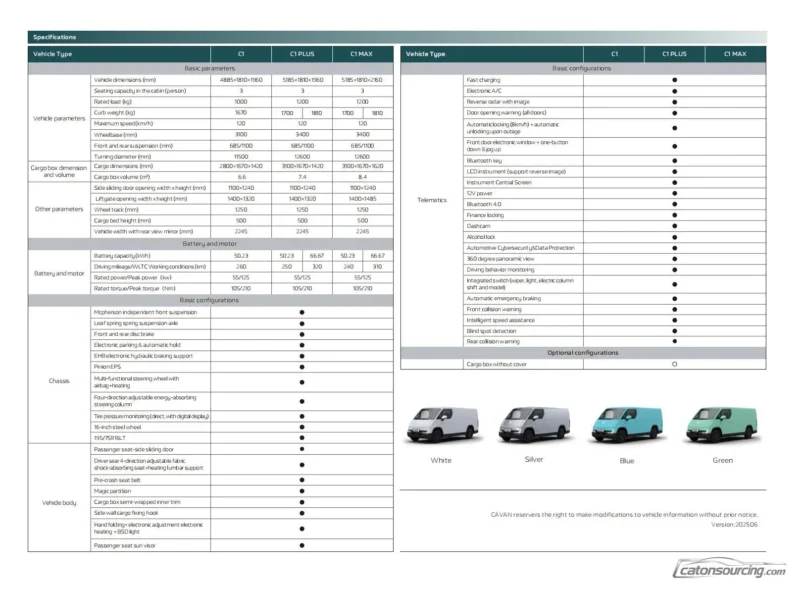
CAVAN C1 Spec
| Vehicle Type | C1 | C1 plus | C1 MAX |
|---|---|---|---|
| VIN | V9P0505S005 | V9P0401S009 / V9P0401S010 | V9P0401S011 / V9P0401S012 |
| MIIT | BJ5031MAB1W1 | BJ5031MBB1W2 / BJ5031MBB2W2 | BJ5031MCB1W2 / BJ5031MCB2W2 |
| Basic parameters | |||
| Vehicle parameters | |||
| Vehicle length (mm) | 4885 | 5185 | 5185 |
| Vehicle width (mm) | 1810 | 1810 | 1810 |
| Vehicle height (mm) | 1960 | 1960 | 2160 |
| Seating capacity in the cabin (person) | 3 | 3 | 3 |
| Rated load (kg) | 1000 | 1200 | 1200 |
| Curb weight (kg) | 1670 | 1700 / 1810 | 1700 / 1810 |
| Maximum speed (km/h) | 120 | 120 | 120 |
| Wheelbase (mm) | 3100 | 3400 | 3400 |
| Front and rear suspension (mm) | 685/1100 | 685/1100 | 685/1100 |
| Turning radius (mm) | 11500 (left) / 12100 (right) | 12600 (left) / 13100 (right) | 12600 (left) / 13100 (right) |
| Cargo box dimension and volume | |||
| Cargo box length (mm) | 2800 | 3100 | 3100 |
| Cargo box width (mm) | 1760 | 1760 | 1760 |
| Cargo box height (mm) | 1450 | 1450 | 1650 |
| Cargo box volume (m³) | 6.8 | 7.5 | 8.5 |
| Other parameters | |||
| Side sliding door opening width x height (mm) | 1100×1260 | 1100×1260 | 1100×1260 |
| Liftgate opening width x height (mm) | 1400×1320 | 1400×1320 | 1400×1485 |
| Wheel track (mm) | 1250 | 1250 | 1250 |
| Cargo bed height (mm) | 500 | 500 | 500 |
| Vehicle width with rear view mirror (mm) | 2245 | 2245 | 2245 |
| Battery and motor | |||
| Battery producer | CATL | CATL | CATL |
| Battery cooling type | Liquid cooling | Liquid cooling | Liquid cooling |
| Battery capacity (kWh) | 50.23 | 50.23 / 66.67 | 50.23 / 66.67 |
| Driving mileage / WLTC (km) | 260 | 250 / 320 | 240 / 310 |
| Rated power / rated torque | 55/125 | 55/125 | 55/125 |
| Peak power / peak torque | 105/210 | 105/210 | 105/210 |
| Basic configurations | |||
| Chassis | |||
| McPherson independent front suspension | ● | ||
| Leaf spring suspension axle | ● | ||
| Front and rear disc brake | ● | ||
| Electronic parking & automatic parking | ● | ||
| EHB electronic hydraulic braking support | ● | ||
| ESC | ● | ||
| Rack and pinion EPS | ● | ||
| Multi-functional steering wheel with airbag + heating | ● | ||
| Four-direction adjustable energy-absorbing steering column | ● | ||
| Tire pressure monitoring (direct, with digital display) | ● | ||
| 16-inch steel wheel | ● | ||
| Hub cap | ● | ||
| 195/75R16LT | ● | ||
| Driver's basic hand tool | ● | ||
| Vehicle body | |||
| Passenger seat-side sliding door | ● / Right-hand drive standard double sliding doors | ||
| 5/5 bi-fold liftgate + 90° & 270° limit | ● | ||
| Driver seat 4-direction adjustable fabric shock-absorbing seat + heating + lumbar support | ● | ||
| Passenger seat 2-direction adjustable | ● | ||
| Pre-crash seat belt | ● | ||
| Magic partition + ventilation hole | ● | ||
| Cargo box semi-wrapped inner trim | ● | ||
| Side wall cargo fixing hook | ● | ||
| Boneless wiper | ● | ||
| Hand folding + electronic adjustment electronic heating + BSD light | ● | ||
| Driver seat sun visor (with bill fold) | ● | ||
| Passenger seat sun visor | ● | ||
| LED headlight | ● | ||
| Daylight | ● | ||
| Front row reading light (automatic light upon door opening + switch) | ● | ||
| 2 lamps in the rear cargo box, one for side sliding door and one for liftgate (automatic lighting upon door opening + switch) | ● | ||
| Cargo box roof | ● | ||
| Aluminium floor in the cargo box | ● | ||
| Telematics | |||
| Fast charging | ● | ||
| EU standard CCS2 | ● | ||
| Automatic headlight | ● | ||
| Headlight height adjustment | ● | ||
| Electronic A/C | ● | ||
| Heating with variable power | ● | ||
| Reverse radar | ● | ||
| Reverse image | ● | ||
| Driver seat & passenger seat air bag | ● | ||
| Door opening warning (all doors) | ● | ||
| Automatic locking (20 km/h) + automatic unlocking upon outage | ● | ||
| Front door electronic window + one-button down & jog up | ● | ||
| Remote control (by mobile phone) | ● | ||
| Central control latch + one mechanical key + one remote control key | ● | ||
| Bluetooth key | ● | ||
| LCD instrument (support reverse image) | ● | ||
| Instrument central screen | ● | ||
| 12V power | ● | ||
| Type A 10W + Type C 30W | ● | ||
| Bluetooth 4.0 | ● | ||
| Finance locking | ● | ||
| Remote OTA | ● | ||
| Dashcam | ● | ||
| 2 loudspeakers | ● | ||
| Alcohol lock | ● | ||
| Message safety & network safety | ● | ||
| 360 degree panoramic view | ● | ||
| Driving behavior monitoring | ● | ||
| Integrated switch (wiper, light, electric column shift and model) | ● | ||
| E-CALL | ● | ||
| DAB-FM | ● | ||
| V2L power take-off inside vehicle — EU standard | ● | ||
| V2L power take-off outside vehicle — EU standard | ● | ||
| Automatic emergency braking (AEB) | ● | ||
| Front collision warning (FCW) | ● | ||
| Lane departure warning (LDW) | ● | ||
| Lane departure prevention (LDP) | ● | ||
| Intelligent high beam control (IHBC) | ● | ||
| Traffic sign recognition (TSR) | ● | ||
| Lane centering keeping (LCK) | ● | ||
| Intelligent speed assistance (ISA) | ● | ||
| Full speed adaptive cruise control (ACC) | ● | ||
| Traffic jam assistance (TJA) | ● | ||
| Integrated cruise assistance (ICA) | ● | ||
| Smart dodging assist (SDA) | ● | ||
| Emergency lane keeping (ELK) | ● | ||
| Lane change assist (LCA) | ● | ||
| Door opening warning (DOW) | ● | ||
| Blind spot detection (BSD) | ● | ||
| Rear collision warning (RCW) | ● | ||
| Rear cross traffic assist (RCTA) | ● | ||
| Rear cross traffic braking (RCTB) | ● | ||
| Front cross traffic assist (FCTA) | ● | ||
| Front cross traffic braking (FCTB) | ● | ||
| Optional configurations | |||
| EU standard observation window | ○ | ||
| Composite material door | ○ | ||
| Cargo box without cover | ○ |
● = standard;○ = optional

暂无评价内容