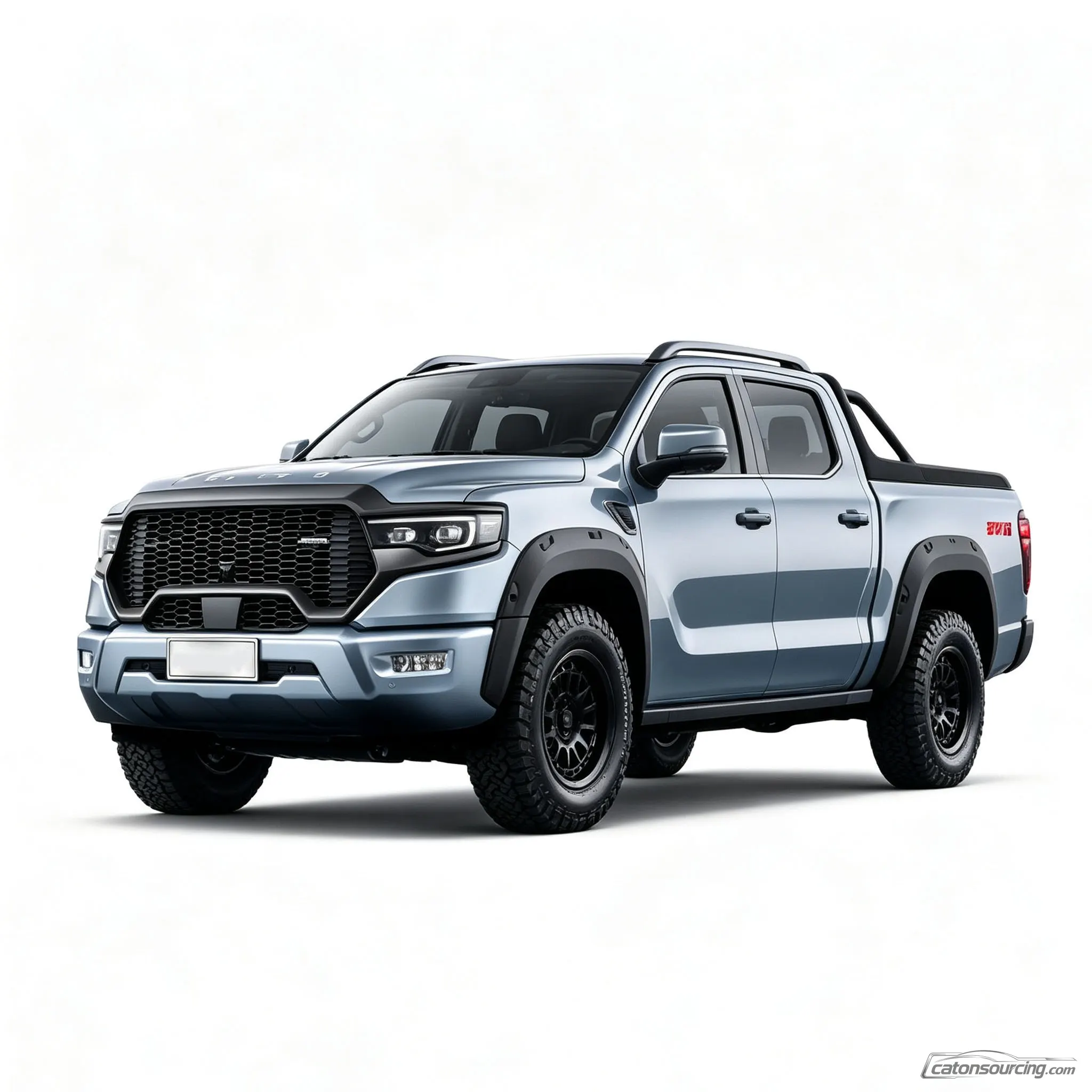
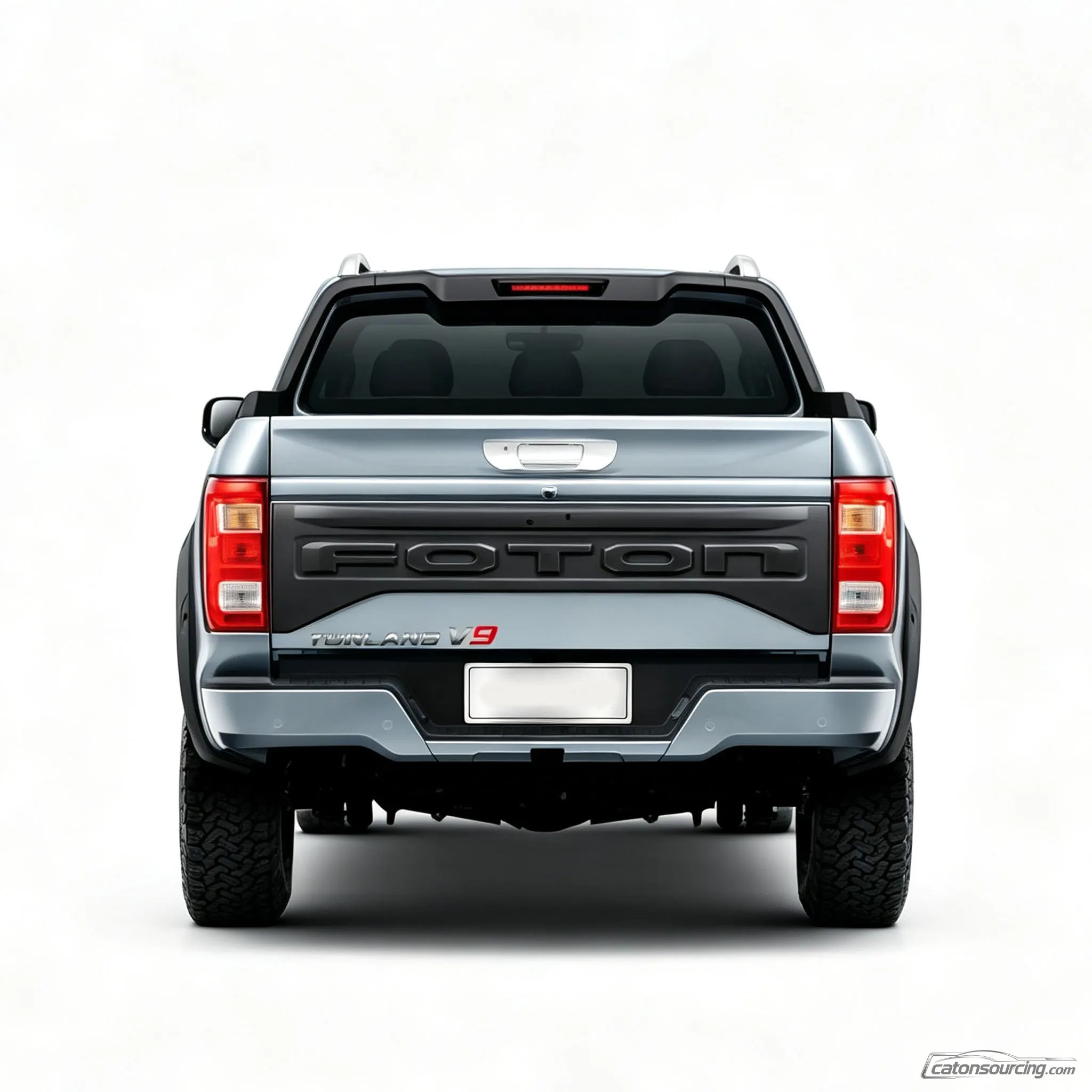
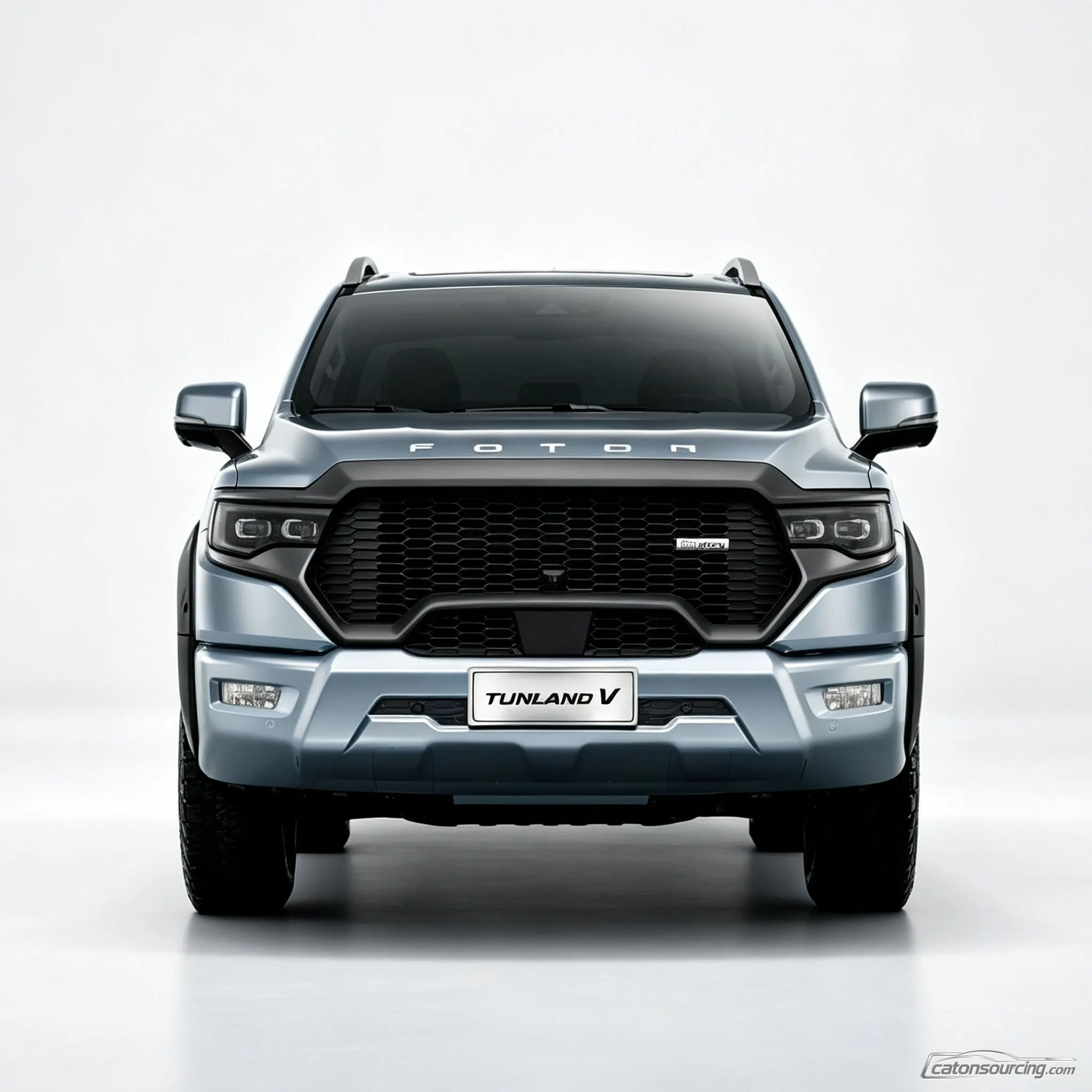
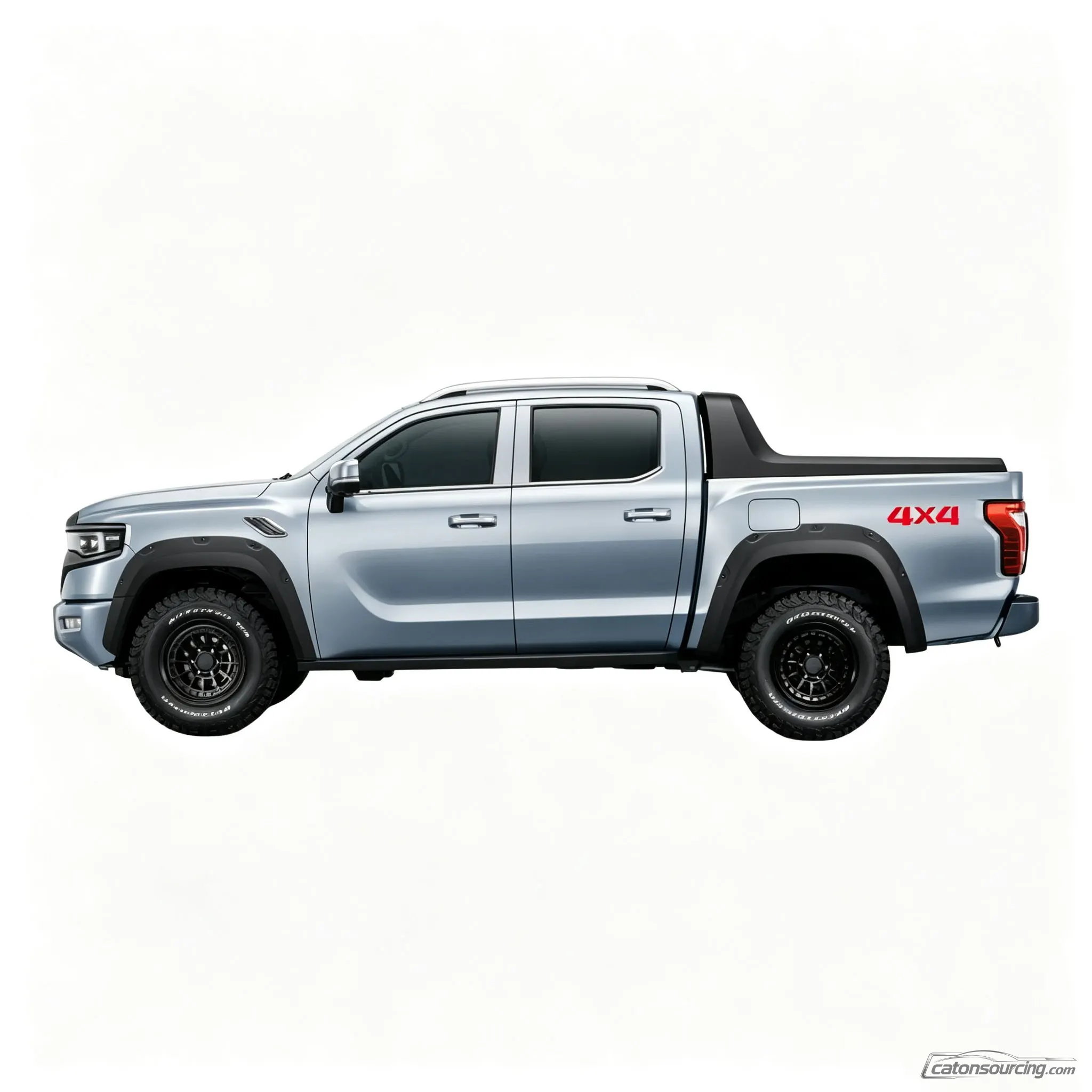
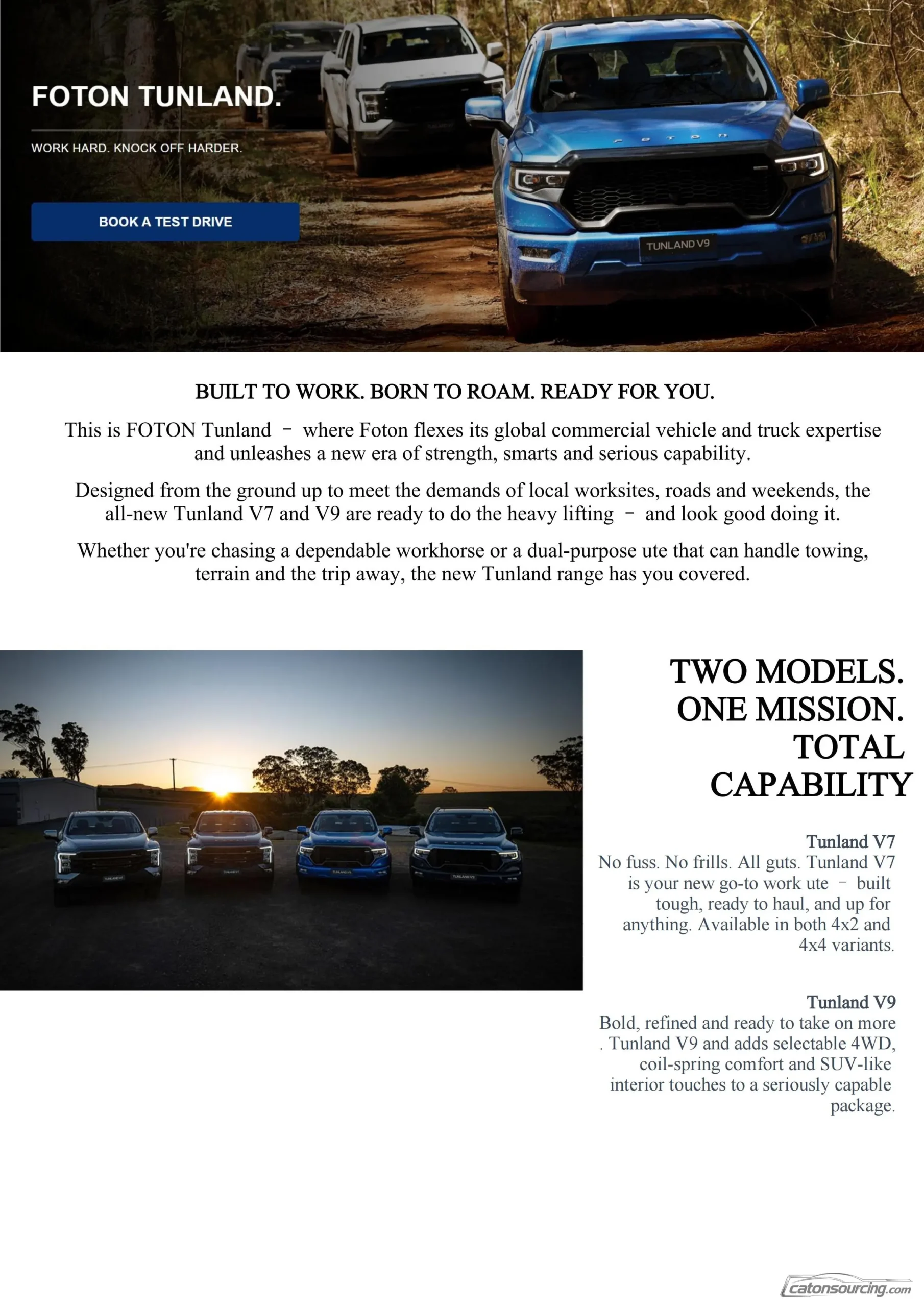
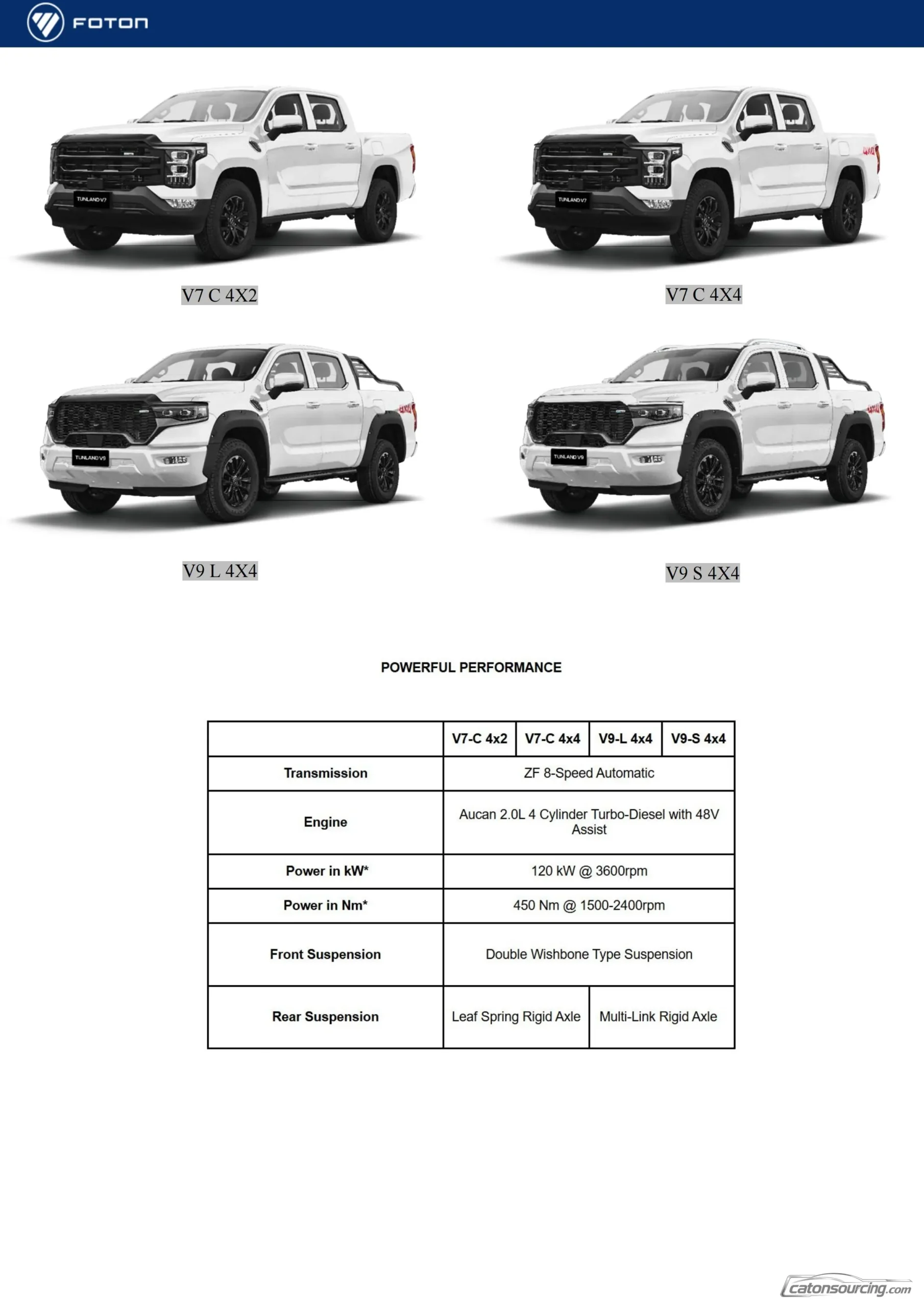
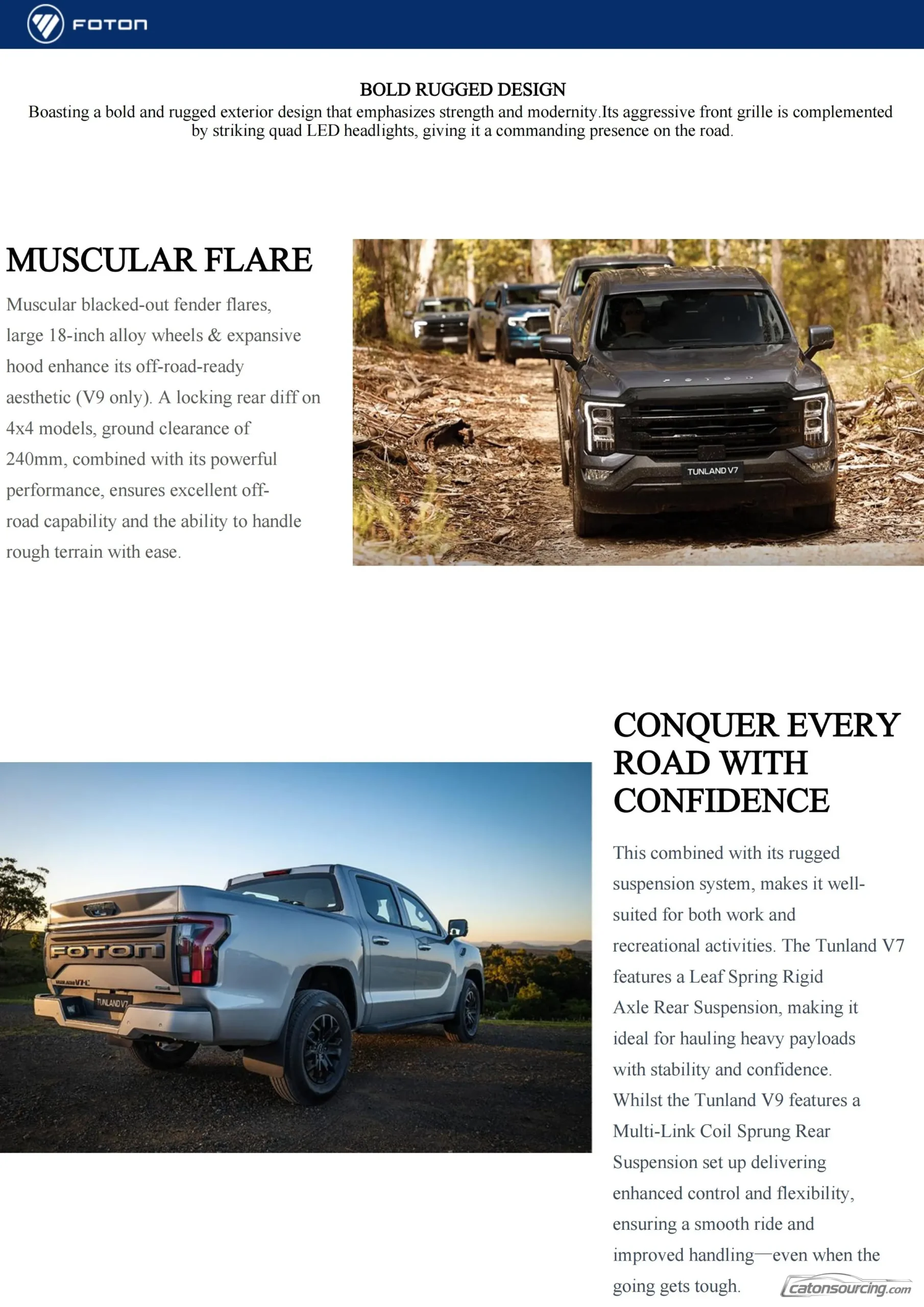
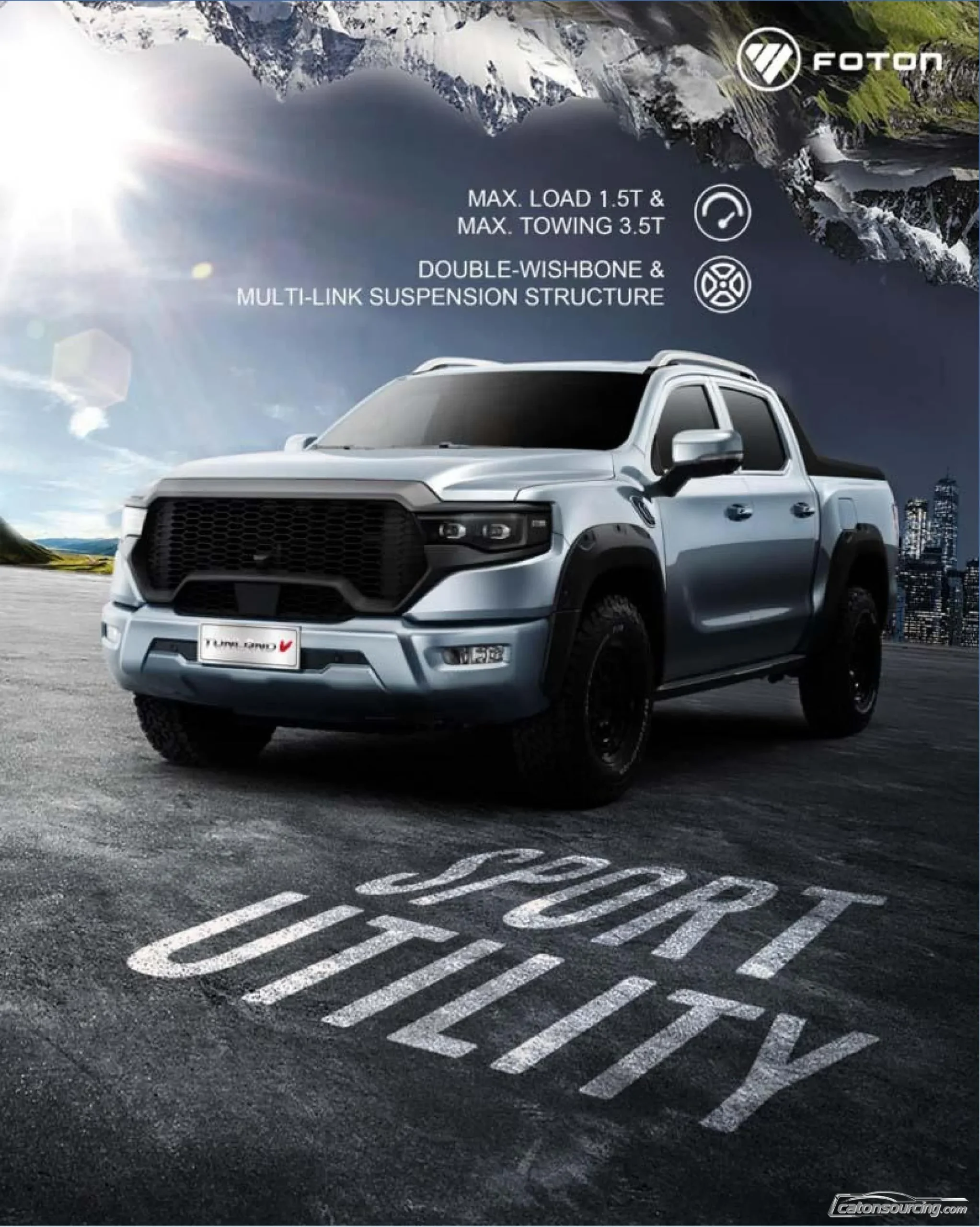
The FOTON Tunland V9 is the flagship of FOTON's pickup range, a full-size double-cab ute that pushes hard into lifestyle territory. It shares its fundamental architecture with the more work-focused V7, but the critical difference is at the rear: the V7 runs a traditional leaf-spring setup, while the V9 adopts a coil-spring multi-link rear suspension. That single change transforms the V9's on-road character, giving it a markedly more settled and comfortable ride, particularly when the tray is empty.
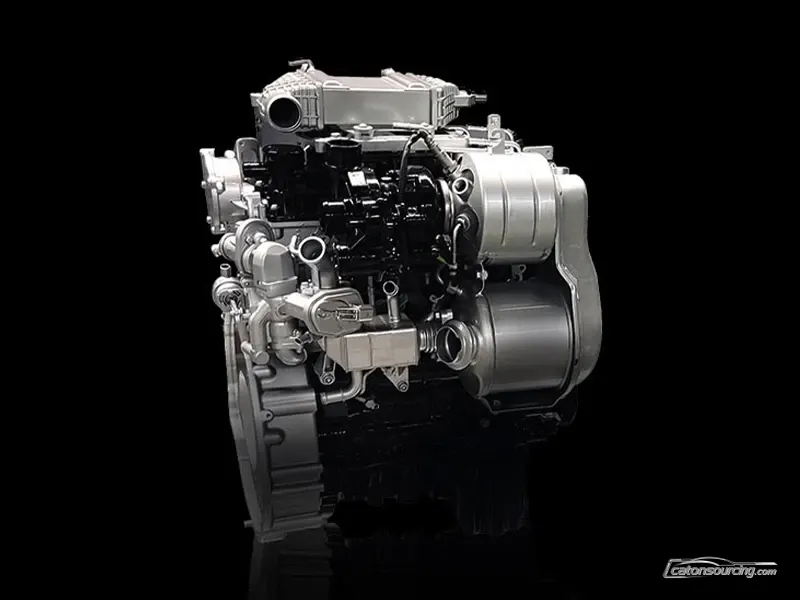
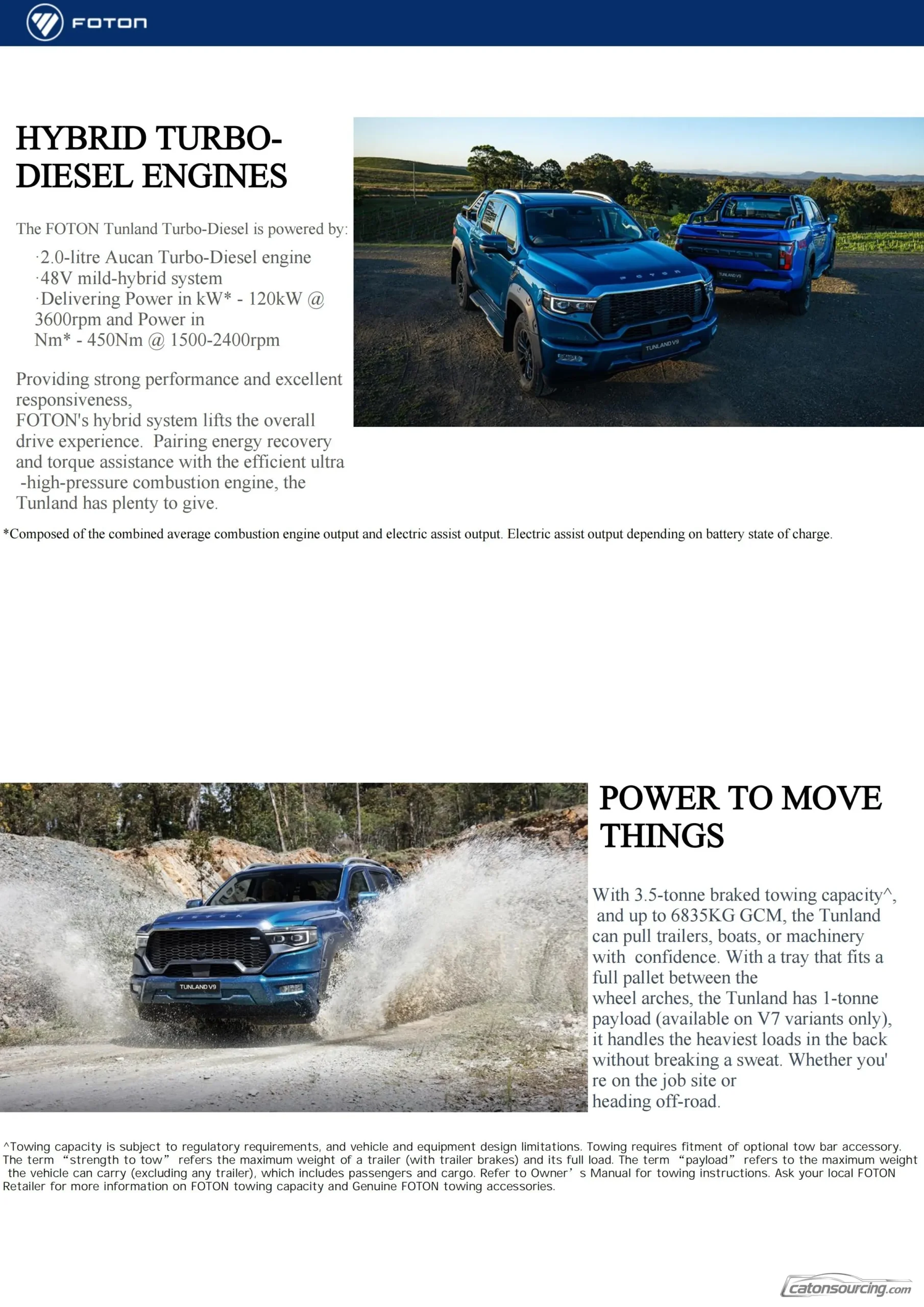
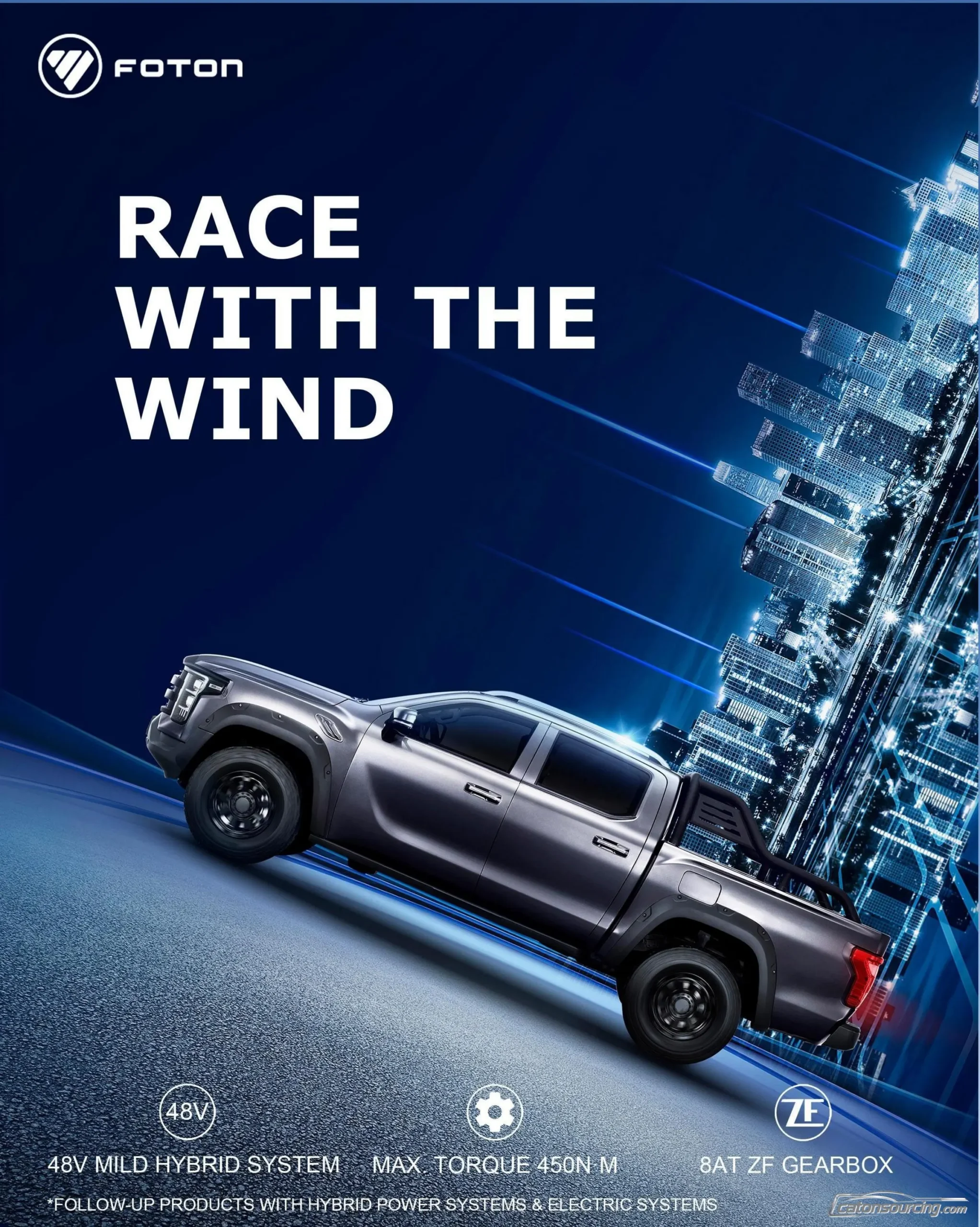
Under the bonnet sits a 2.0-litre four-cylinder turbo-diesel engine paired with a 48-volt mild-hybrid system. FOTON quotes a combined output of 120 kW and 450 Nm of torque, with the mild-hybrid unit contributing additional instantaneous shove at low speeds. The engine is part of FOTON's "Aucan" family, co-developed with Cummins, and is claimed to be engineered for B10 durability—meaning nine out of ten examples should exceed 500,000 km before major overhaul. Power goes to the ground through a ZF-sourced eight-speed automatic transmission. Australian-market V9 models are exclusively four-wheel drive, with a dual-range transfer case and a rear differential lock; the V9-S grade adds a front differential lock as well. Drive modes include Eco, Standard, Sport, Sand, Mud, and Snow.
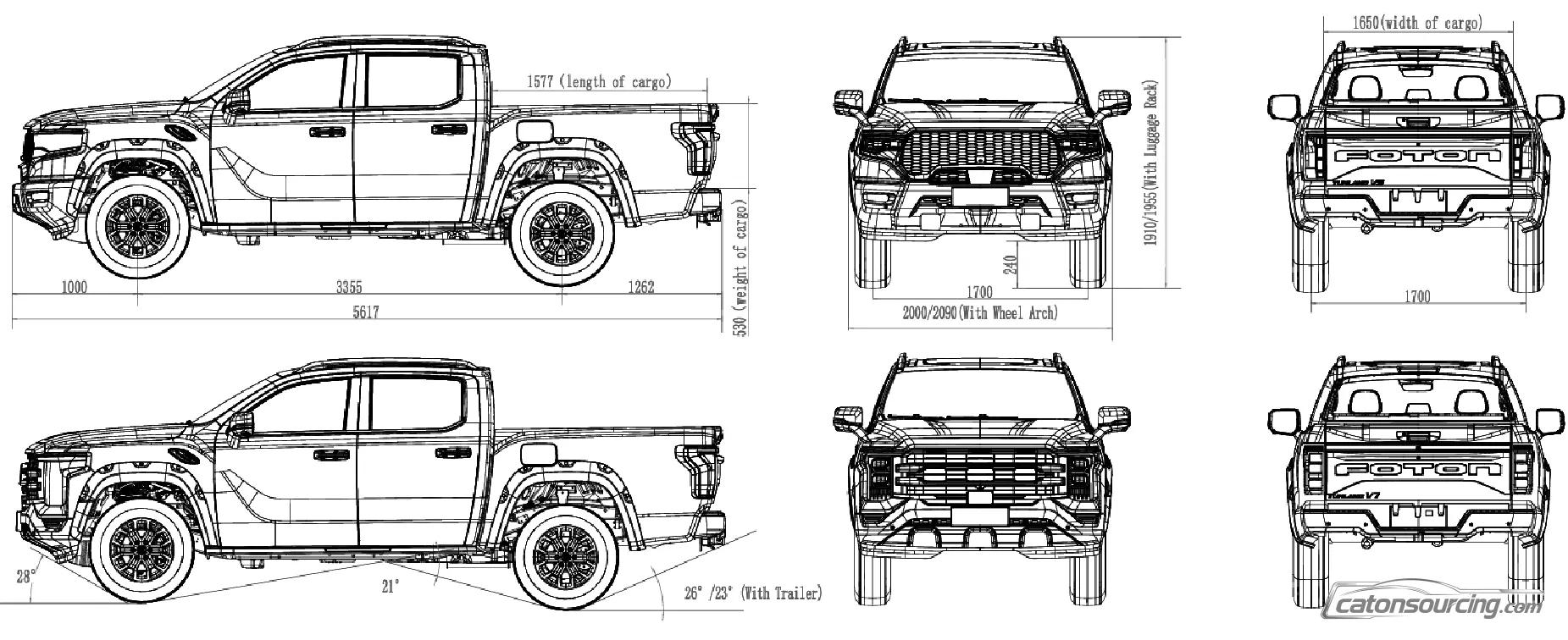
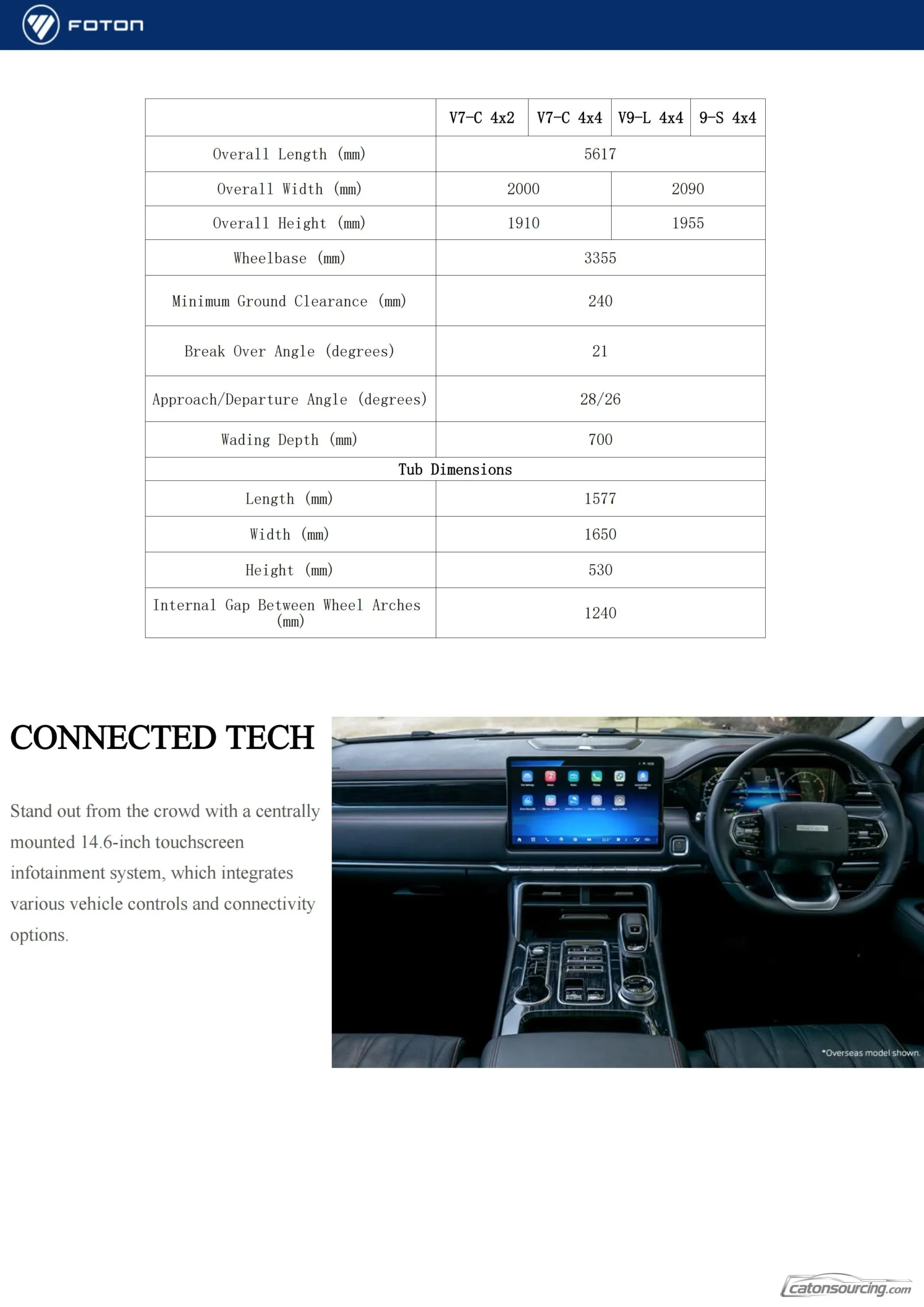
The V9 is a genuinely large vehicle. It measures 5,617 mm in length, 2,090 mm in width, and 1,955 mm in height, with a 3,355 mm wheelbase. That makes it substantially longer than a Toyota Hilux or Ford Ranger, and it approaches the footprint of American full-size trucks like the Ram 1500, though it remains roughly 200 mm shorter than a Ram. Ground clearance is rated at 240 mm, wading depth at 700 mm, and the approach, breakover, and departure angles are 28, 21, and 26 degrees respectively. Braked towing capacity is 3,500 kg. Payload figures vary by market and specification: Australian and South African models list around 1,000 kg, while New Zealand testing recorded 995 kg and Malaysian specifications cite 895 kg.
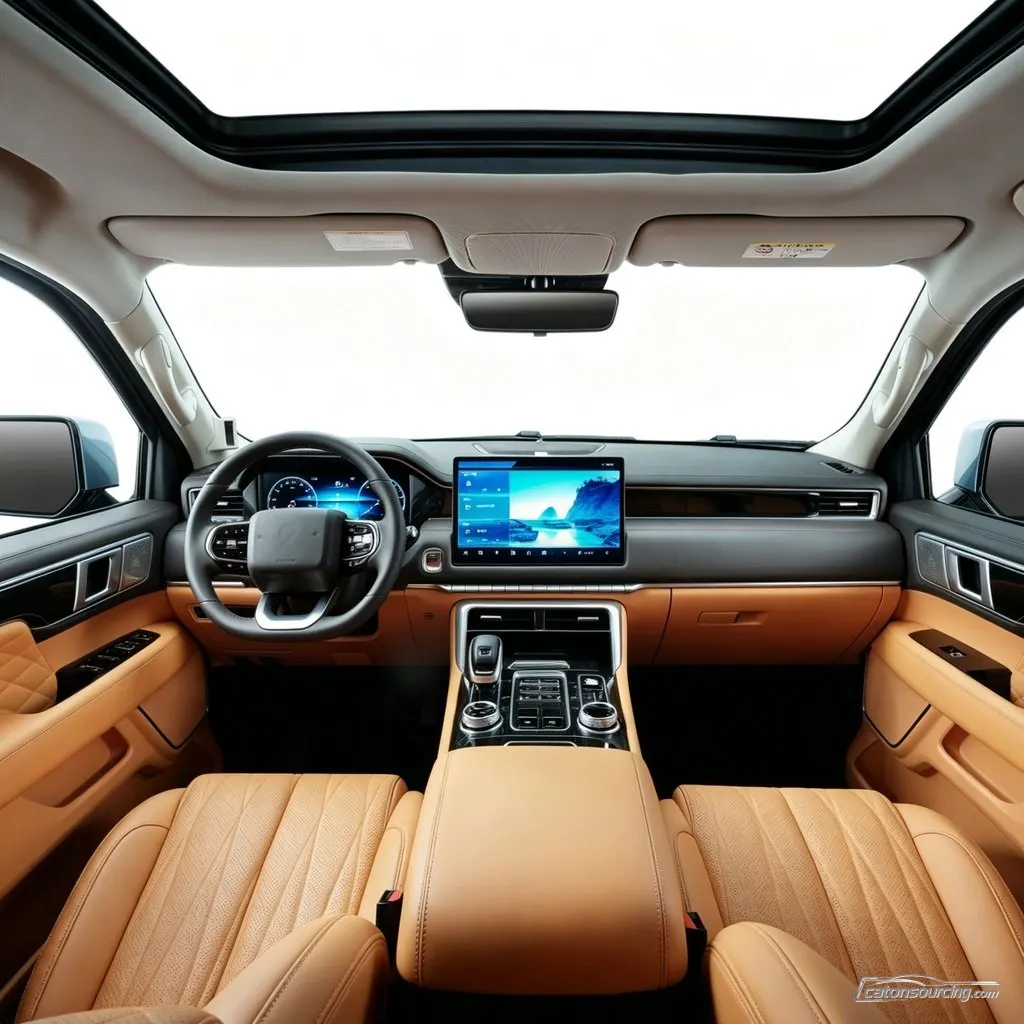
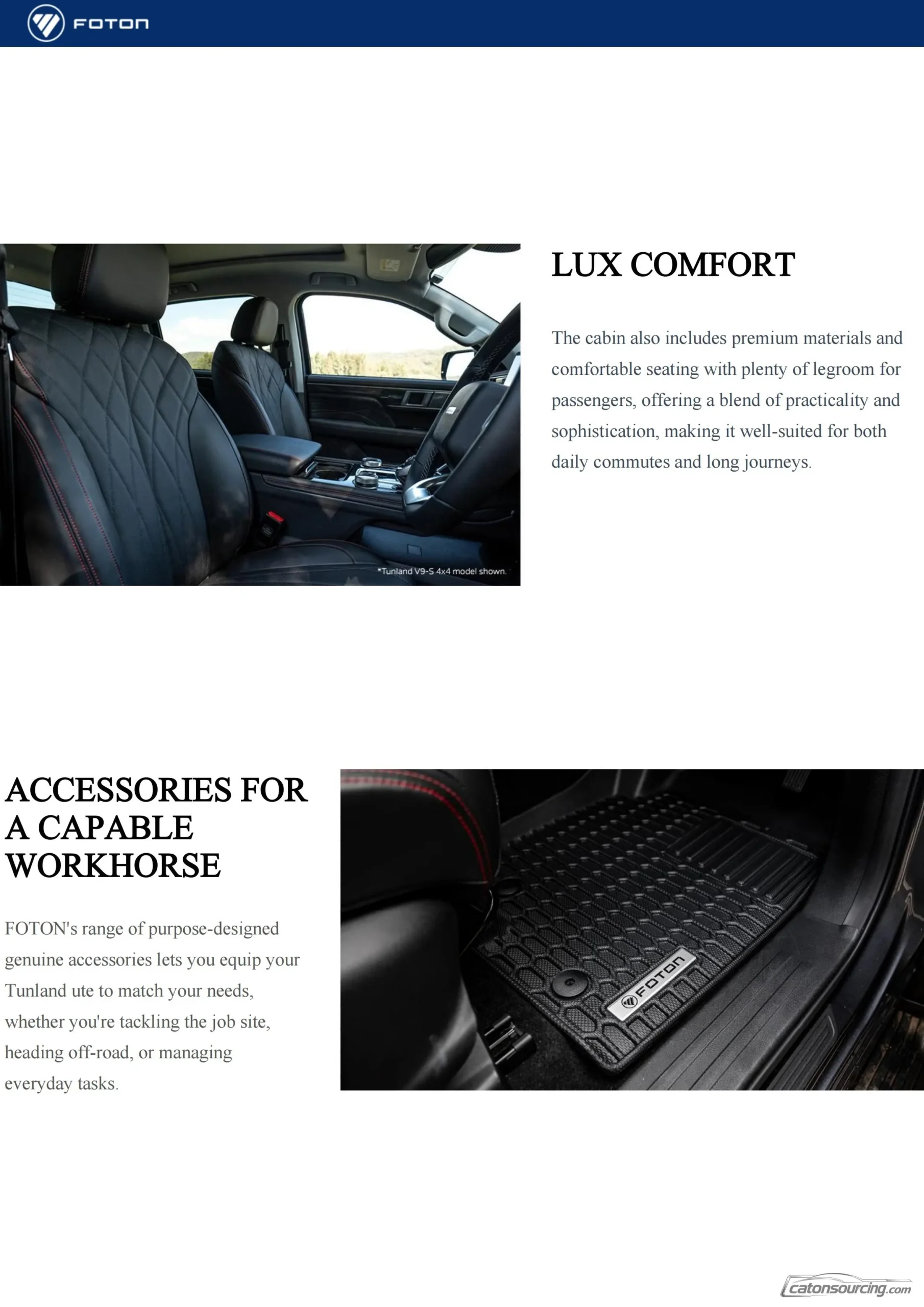
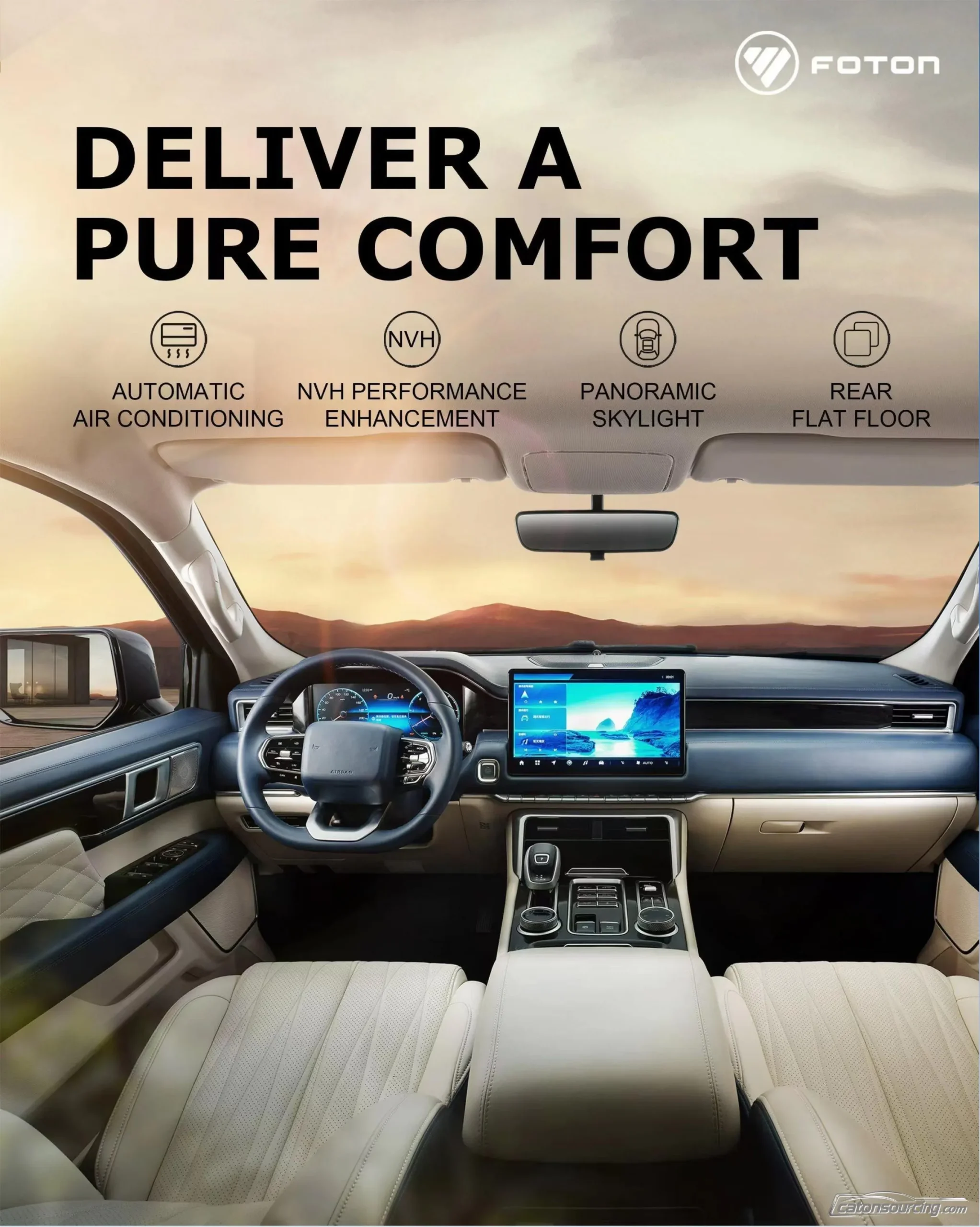
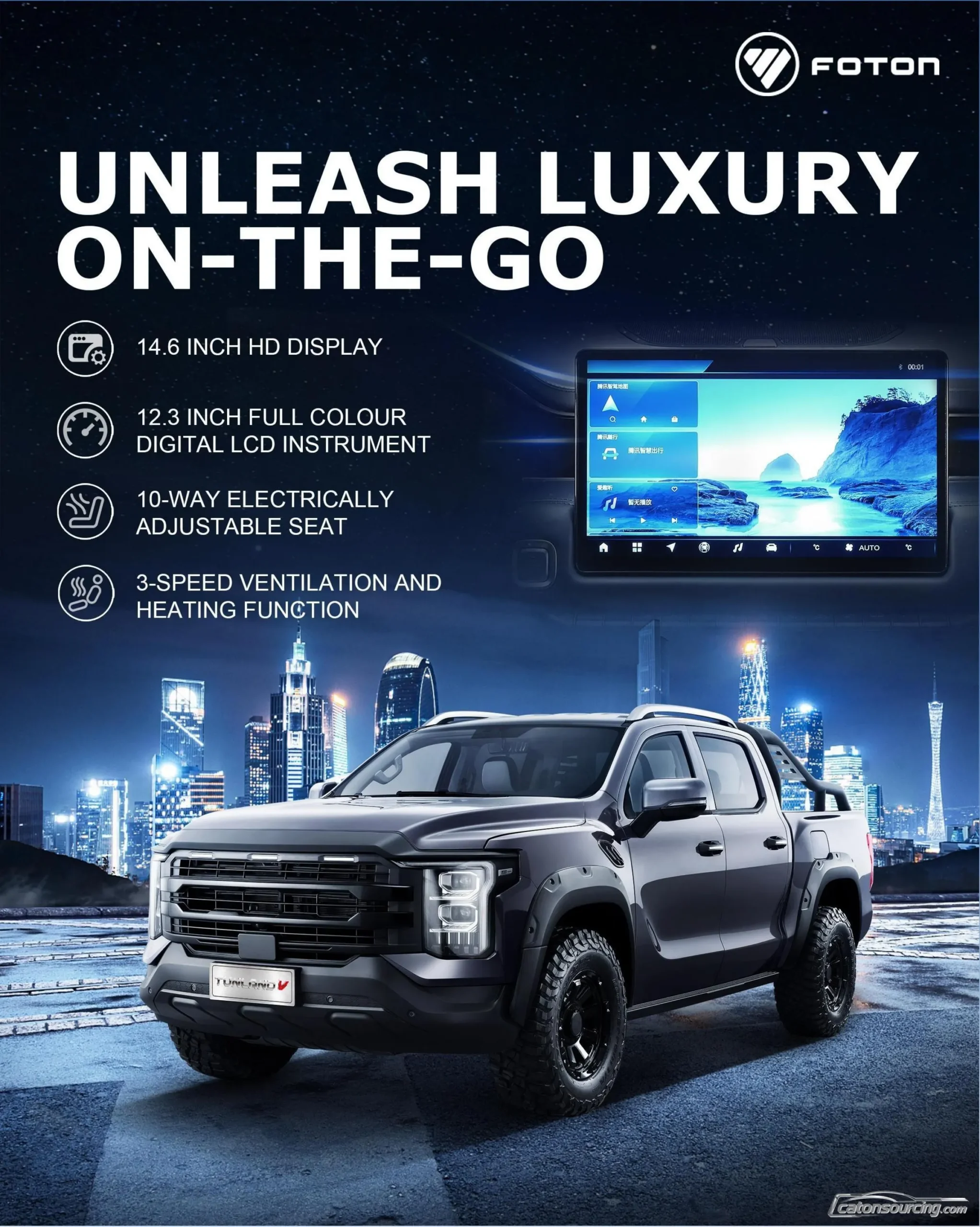
Inside, the V9 makes its strongest case for the premium positioning. A 14.6-inch central touchscreen dominates the dashboard, paired with a 12.3-inch digital instrument cluster. The cabin features synthetic leather upholstery, dual-zone automatic climate control, wireless charging, ambient lighting, and keyless entry with push-button start. Higher trim levels add a panoramic sunroof, ventilated front seats, an eight-way electrically adjustable driver's seat with memory, and a heated steering wheel in some markets. FOTON claims NVH performance has been improved by 15% over previous models, and reviewers generally describe the cabin as quiet and well-insulated at cruising speeds, though the diesel engine can sound gruff at idle. One Australian reviewer noted the seats are broad but somewhat flat, with backrests that do not come far enough forward for taller drivers.
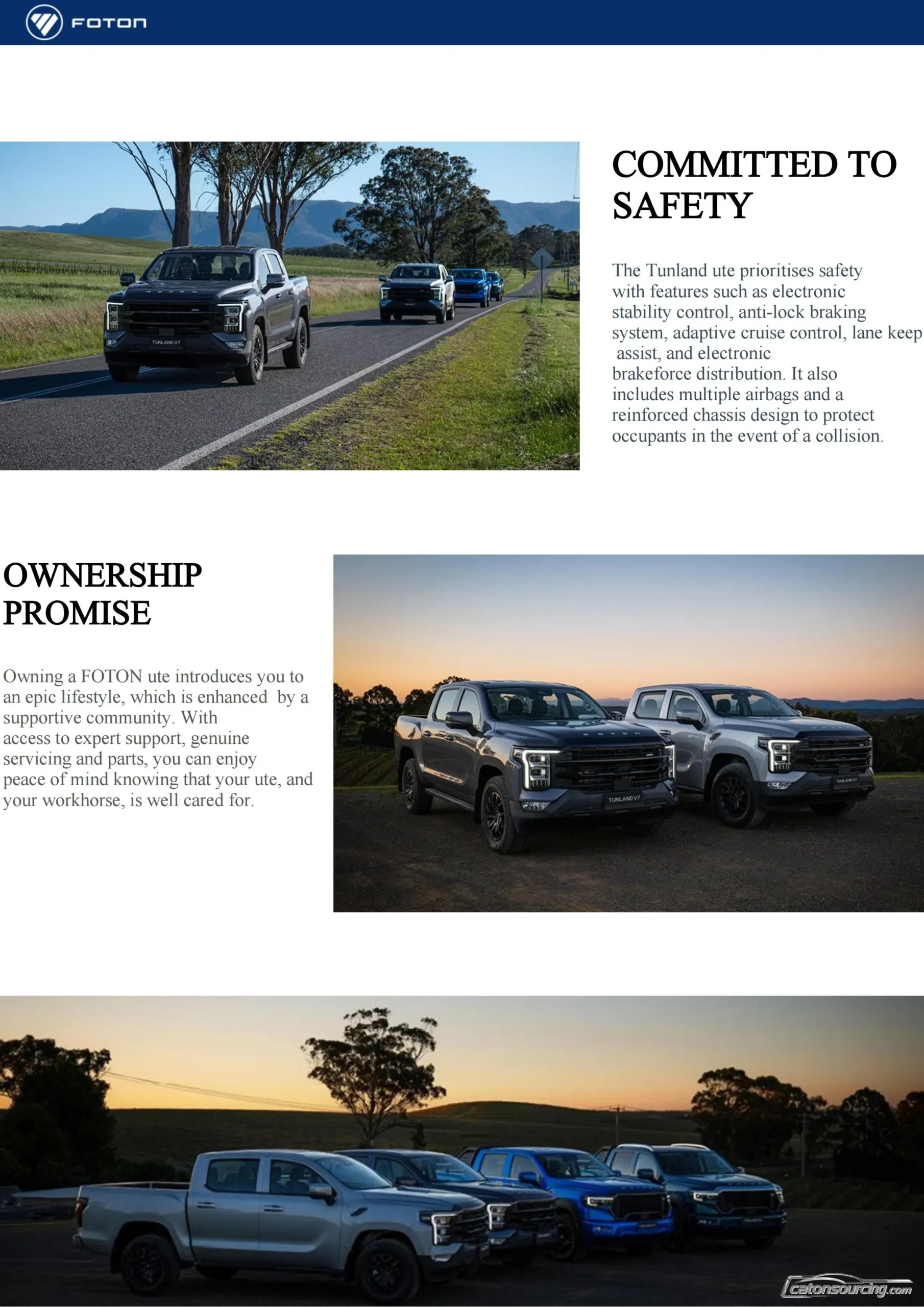
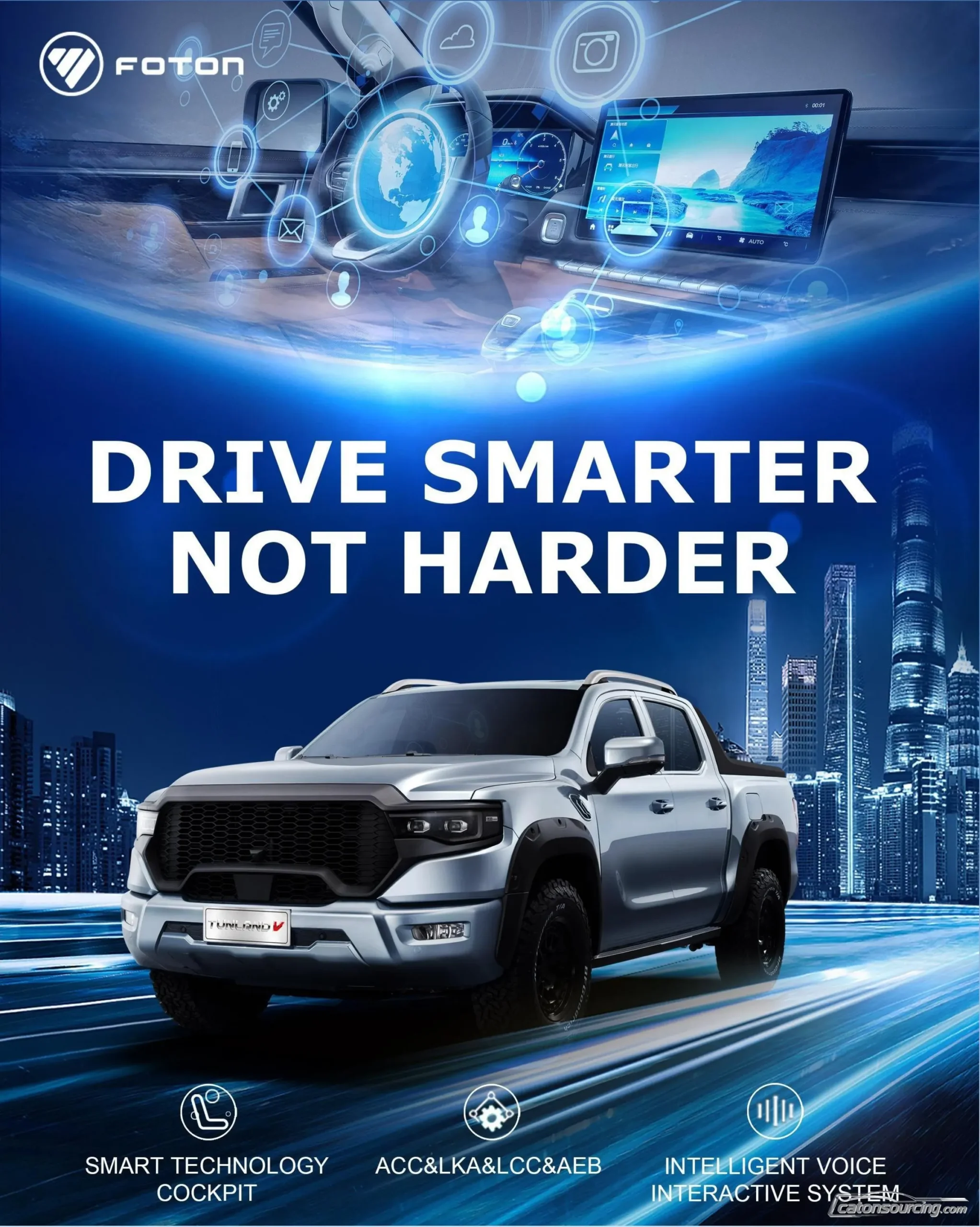
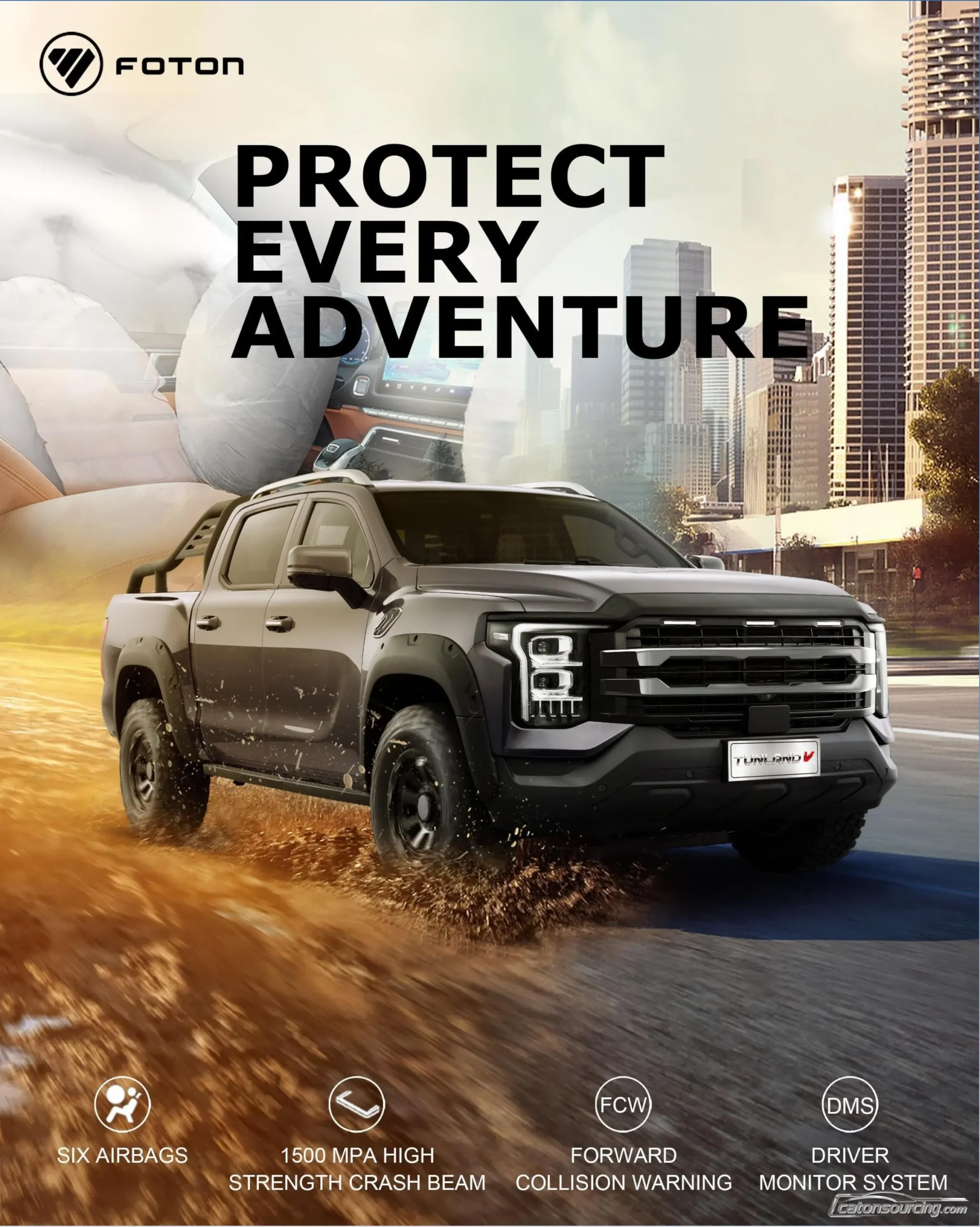
Safety and driver assistance equipment varies significantly by market and trim. South African VLX models include tyre pressure monitoring, driver attention monitoring, forward collision warning, pedestrian collision warning, blind spot detection, lane-change assist, rear cross-traffic alert, a 360-degree camera, and front and rear parking sensors. Stepping up to the LTD grade adds adaptive cruise control, autonomous emergency braking, lane-keep assist, traffic sign recognition, and traffic jam assist. Australian V9-S models similarly add front and rear differential locks, a panoramic sunroof, and additional technology over the V9-L. FOTON states the Tunland V series supports an L2.5-level driver assistance suite in several markets, though the specific features included depend on region and specification.
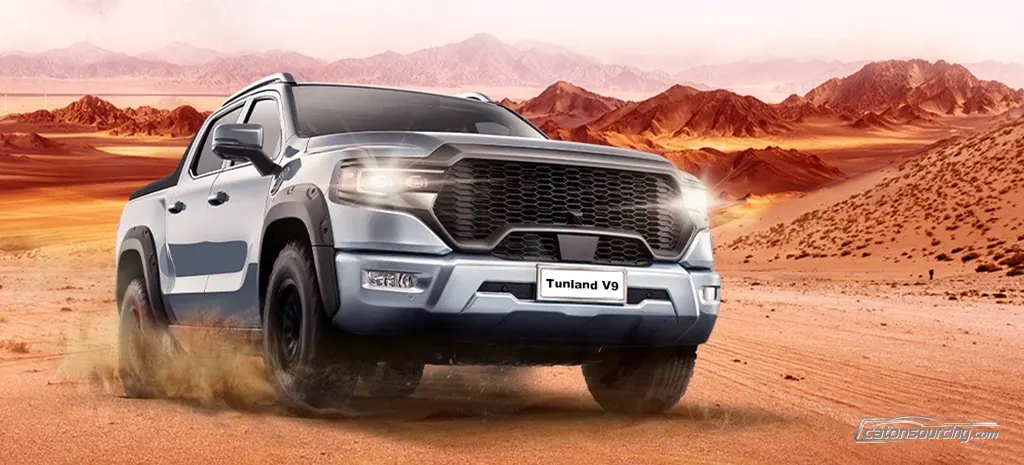
On the road, reviewers describe the V9 as easier to drive than its dimensions suggest. The coil-spring rear end gives it a compliance that the leaf-sprung V7 cannot match, and the steering, while light and short on feedback, makes the big ute feel more manageable in urban settings than expected. The powertrain is adequate rather than brisk: around town it feels refined and the ZF gearbox shifts smoothly, but at highway speeds, asking for a hard overtake can leave the engine feeling breathless. Fuel consumption in Australian testing settled around 9.3 L/100km in mixed driving, against an official claim of 8.0 L/100km. The V9 requires AdBlue, with a 12-litre tank.
The V9 has been launched in markets including Australia, New Zealand, South Africa, Malaysia, Spain, Brazil, and the Philippines, with specifications, pricing, and equipment levels differing considerably across regions. In Australia, pricing ranges from roughly AU$45,990 for the V9-L to AU$49,990 for the V9-S before on-road costs. In South Africa, the VLX starts at R725,900 and the LTD 4x4 at R799,900. Spanish pricing sits around €49,125 to €51,875 depending on financing. For buyers seeking a large, comfort-oriented pickup with a genuinely premium-feeling cabin and a long list of standard technology, the Tunland V9 represents FOTON's most ambitious and refined offering to date.

暂无评价内容